
Caliper Reorders: Separate Cores from Replacement Stock
Keep used cores, assessment events and conditional account credits outside the physical replacement units available for approved caliper demand.
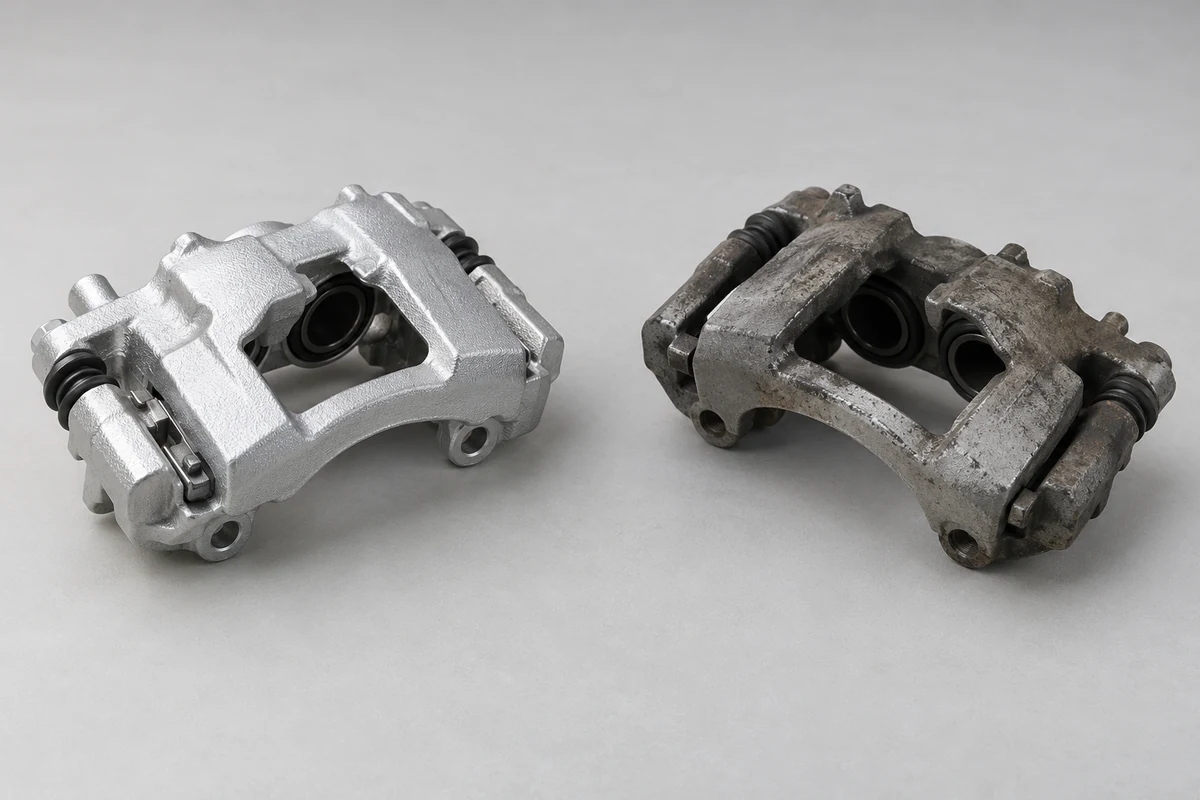
A returned used caliper core and a replacement caliper are different inventory populations. If a generic receipt code adds both to the same availability balance, core arrivals can hide a replacement shortage. Separate the physical populations before using the total to reduce a reorder.
This is a replenishment classification decision. It does not value a core, determine eligibility for credit, establish legal ownership or instruct anyone how to prepare a used part for return.
A core program is a separate commercial process
ZF's European Core Return Guidelines, revision 01_2026, describe an authorized-customer reverse-logistics process and distinguish core-return and account events. The official document was reopened on 14 October 2026. Its scope belongs to that named program; it establishes no automatic credit, collection entitlement or replacement delivery for another offer. ZF European core-return guidelines
For the actual transaction, identify the governing program and responsible account owner. Keep the replacement purchase reference separate from the returned-core reference even where a commercial link connects them. An account balance about core charges is not a physical quantity of accepted replacement units.
Do not call every core worthless or unusable in every sense. Its program role may be meaningful, but that does not make it available as the replacement product required by a job. The classification protects the purchasing calculation without making a technical or financial assessment.
Give the replacement ledger its own eligibility basis
Record the exact approved replacement reference, supported eligible quantity and allocations. Distinguish new or remanufactured replacement supply according to the actual accepted requirement; do not confuse an approved remanufactured product with an unassessed used core awaiting a program outcome.
Keep other holds and application questions visible. A correctly classified replacement unit may still be unavailable to the current demand because its condition, identity or reservation is unresolved. Reclassification as replacement is not a substitute for the normal authorized acceptance process.
For inbound supply, use only a separately supported replacement commitment with its actual remaining quantity and relevant dates. A core collection booking or expected assessment does not create inbound replacement stock unless the actual agreement and commitment establish such supply.
Track core events without converting them into units
The core record can distinguish recorded receipt, program submission, collection, arrival, assessment and any confirmed account event. Preserve the status actually supported by evidence. Do not call a pending assessment an accepted credit, or a credit note a replacement shipment.
A monetary credit and a physical replacement quantity need different fields and units. They may affect different decisions in the same purchasing relationship, but subtracting a currency amount or core count from replacement demand is not a valid unit conversion.
| Field | What belongs in the record |
|---|---|
| Replacement obligation | Approved product and unique required units |
| Usable replacement unit | Eligible accepted supply available to those obligations |
| Returned core | Distinct used population and program reference |
| Assessment state | Actual supported event, with unanswered conditions retained |
| Conditional credit | Commercial status separate from physical stock |
| Purchase requirement | Replacement gap without core or credit netting |
Fictional example: a balance of eleven hides a gap of three
Assume five fictional approved replacement calipers are required. Stores contains two eligible replacement units and nine used cores recorded for a separate return program. A generic “calipers on hand” balance shows eleven. These quantities describe no actual stock or program account.
Replacement coverage is two units, leaving three replacement units uncovered. The nine cores remain visible in their own population; they do not reduce the five-unit demand. Their eventual program treatment is a separate question for the responsible account owner.
Suppose three cores later receive a confirmed account credit. That event updates the commercial record but still does not add three replacement calipers to stores. If the buyer separately places and receives an approved replacement order, those actual units enter the replacement ledger under their own evidence.
If the program instead confirms a specific replacement shipment under the actual agreement, record it as an identified inbound commitment rather than infer it from the core count. Its timing and unreceived quantity need the same supported treatment as other replacement supply.
Correct the balance without erasing the program history
Ask the inventory owner to preserve core identities and their commercial links while removing them from unsupported replacement availability. Do not delete the core records or rewrite completed account events to make the balances simpler.
The final reorder proposal should show replacement demand, supported replacement coverage, the remaining gap and any uncertain inbound separately. Physical preparation, transport acceptance, core valuation and settlement remain with their qualified providers and governing agreements. No such approval is created by a clean inventory table.
Request the identified replenishment
See Brakes parts for category context. In an Autoparts sourcing request, identify the approved product and the unresolved replenishment question. The form accepts an 8–1200-character description or supported marketplace link, and up to five PNG, JPEG, WebP or GIF images, limited to 10 MiB each and 20 MiB total. Other technical files need a separately agreed, authorized exchange; the image field is not a PDF, CAD or ZIP portal.
Named manufacturer products are documentary examples, not branded supply offers, affiliation or evidence that another supplier can make or validate an alternative. Independent buying coordination and supplier negotiation do not establish fit, safety approval or guaranteed savings.
Frequently asked questions
Can returned cores reduce replacement-caliper demand?
Not merely because they are physically present. Keep cores in their own program population and apply only supported eligible replacement units to the approved demand. A used core awaiting assessment is not the same record as an accepted remanufactured replacement product.
Does a core credit create replacement stock?
No. An account event does not itself establish a physical replacement receipt or inbound commitment. Keep currency and unit quantities separate, and use the actual agreement and identified replacement supply evidence for any linked shipment.
Do the cited European ZF rules apply to every supplier?
No. They describe the named program and authorized customer process. Another offer needs its own terms and responsible account owner. Do not infer automatic collection, credit, refund, portal access or replacement delivery from the example.
Should core records be deleted to fix availability?
No deletion is recommended. Preserve the used-core population, program references and actual event history while separating it from replacement availability. Route any correction through the inventory owner and keep unresolved eligibility and account questions visible.
Sources
Discuss a sourcing request related to this article.Caliper Reorders: Separate Cores from Replacement Stock