
Clutch Repacking: Keep Applicable Locking Pieces Outside the Cosmetic Scope
Review a clutch packing proposal against the exact variant before cosmetic repacking removes an applicable locking piece or obscures an unresolved supplied state.
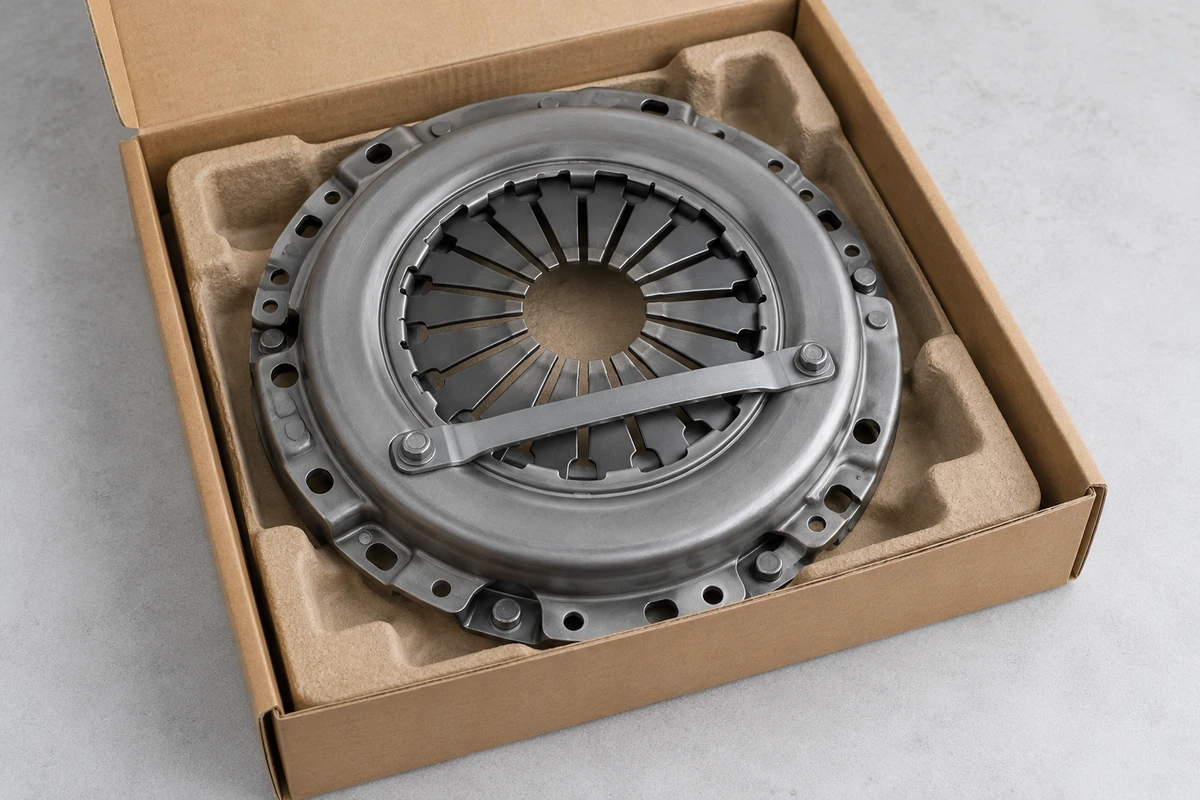
A request to make a clutch package look tidier can accidentally include a component that belongs to the clutch’s supplied mechanism. Before approving cosmetic repacking, establish whether the proposed removal concerns ordinary packaging or an applicable locking piece. The packer’s description of an item as shipping scrap is not enough to settle that distinction.
Begin with the exact clutch already approved for purchase. The buyer’s decision is whether the packing proposal stays within its authorized scope. Identification, removal, resetting and installation of the mechanism require the responsible product provider; none is a task created by the packaging worksheet below.
Lock presence is variant-specific
ZF’s English service information 12844 EN, dated April 2024 and checked on 14 October 2026, distinguishes XTend Type II and III versions supplied with or without a locking piece according to item number. It also places removal of an applicable locking piece within the installation process. The limited purchasing lesson is that a locking piece may be part of the required supplied state and cannot be classified from a generic clutch photograph. ZF XTend Type I–IV service information, pages 3–6
This document covers named passenger-car XTend designs. It does not establish the features of another clutch, require a lock on every version or authorize a buyer to interpret a mechanism from its appearance. Obtain applicable information from the actual provider for the supplied item. The source’s repair procedures are outside this article’s scope.
Replace vague appearance language with a stated boundary
Ask the packing proposer to identify what it intends to change: outer carton, presentation insert, loose packing material, an attached piece or an unidentified item. Preserve the distinction in the written proposal. A single instruction to remove all shipping pieces hides a product decision inside a cosmetic request.
The record should state the exact clutch reference, the provider’s description of its required delivered state and the evidence identifying any applicable locking piece. Existing attributable product records may answer this without creating a new physical inspection task. If the evidence is inconclusive, mark the identity unresolved and send the question to the responsible provider.
The buyer can continue discussing outer artwork or carton wording while the mechanism-related change remains unapproved. Approval of those unrelated details must not be copied into an overall instruction suggesting that every proposed action is accepted. Name the excluded action clearly enough that the final packing order cannot be read as permission to perform it.
Compare the proposed state with the purchased state
Use a short change record, rather than a universal checklist demanding that every clutch look the same. This editorial aid distinguishes administrative approval from technical disposition.
| Decision field | Evidence to record |
|---|---|
| Exact supplied clutch | Approved item reference and provider; no family-name shortcut |
| Required delivered state | Applicable product record and the provider’s confirmed interpretation |
| Item called packaging | Proposer’s description and whether its role is established |
| Proposed cosmetic action | What the packing request would remove, replace or conceal |
| Product-owner response | Exact proposal covered, decision and conditions, if any |
| Unresolved boundary | The specific action that has no authorization |
A packing provider’s willingness to carry out a change says nothing about whether that change is permitted for the clutch. Equally, a generic manufacturer bulletin can identify a question without answering it for a different item number. The response must connect the actual product and the actual proposal.
Do not assign a remedy in the final column. If a piece has already been removed, the record becomes a supplied-condition discrepancy requiring provider disposition. A new photograph with the piece placed nearby would not establish restoration of the original state. Purchasing should preserve the known sequence and uncertainty rather than declare the clutch corrected.
Fictional example: two similar-looking clutches, different answers
Imagine fictional approved items C-L and C-N. An applicable provider record identifies C-L as a version supplied with a locking piece. C-N’s record identifies a version supplied without that piece. These references are invented and cannot be used to identify a real clutch.
A packer proposes removing the visible piece from C-L because it interrupts the appearance of a new insert. The buyer keeps that proposed action unapproved and asks for an outer-packing alternative that respects C-L’s established supplied state. A smaller or tidier insert is a commercial preference, not evidence that the mechanism can be changed.
The packer then points to C-N and says the missing piece proves the same removal is harmless. That comparison does not answer C-L’s item-specific requirement. The two records establish different baselines. The buyer also should not reject C-N merely because it lacks a feature identified for C-L.
If the provider cannot establish C-N’s exact version, mark C-N’s supplied-state evidence as unresolved. This is a narrower and more useful finding than inventing a rule that every clutch needs a visible lock. It tells the buyer which reference needs clarification and prevents the packing team from adding or removing parts to imitate a sample photo.
Approve a cosmetic scope the next person can understand
Close the review with the accepted product reference, retained supplied-state requirement, permitted packaging changes and any unresolved exception. Where the presentation concept cannot accommodate the approved state, request another proposal and its actual commercial terms. Do not estimate savings or accept an altered clutch solely to meet a box-size target.
A clear boundary does not certify that the clutch has been packed correctly or that its mechanism is functional. Those conclusions need the agreed evidence and responsible review. There are no removal, adjustment, resetting or installation instructions in this purchasing record.
For broader sourcing context, see Engine parts and how we check an auto-parts supplier. An Autoparts sourcing request can describe the exact clutch and the disputed packing action in 8–1200 characters. It supports up to five PNG, JPEG, WebP or GIF images, no more than 10 MiB each and 20 MiB total. Arrange PDF, CAD or ZIP documents through a separately agreed, authorized exchange. The manufacturer example does not imply affiliation, branded-goods supply, engineering approval or another supplier’s capability.
Frequently asked questions
Must every self-adjusting clutch arrive with a visible locking piece?
No universal appearance rule follows from the example. Establish the required supplied state for the exact item through its applicable provider information. An unexplained absence is a question to resolve; a confirmed version designed without that piece should not be altered merely to match another variant.
Can the buyer approve removal because the new insert is too shallow?
A presentation constraint does not authorize a mechanism change. Request an alternative packing proposal that preserves the established state, or refer the exact proposed change to the responsible product provider. Keep any technical disposition separate from approval of the insert design or artwork.
What should be recorded if the piece was already removed?
Identify the affected item, the reported action and the known supplied-state evidence, then request a product-specific disposition. Do not close the discrepancy by asking a general packer to put it back, reset anything or recreate the appearance of a reference image. Those steps are outside cosmetic packing scope.
Is the ZF bulletin proof that an unbranded clutch uses the same lock?
The bulletin concerns its named XTend designs and date. It illustrates the need for item-specific evidence but does not identify another supplier’s product. Obtain that product’s actual requirements and keep unanswered mechanism questions visible before releasing the affected packing action.
Sources
Discuss a sourcing request related to this article.Clutch Repacking: Keep Applicable Locking Pieces Outside the Cosmetic Scope