
Gasket Reorders: Buy the Confirmed Remaining Gap
Use attributable retained gasket-set contents and a confirmed individual offer to define the remaining purchase without rebuilding the repair scope.
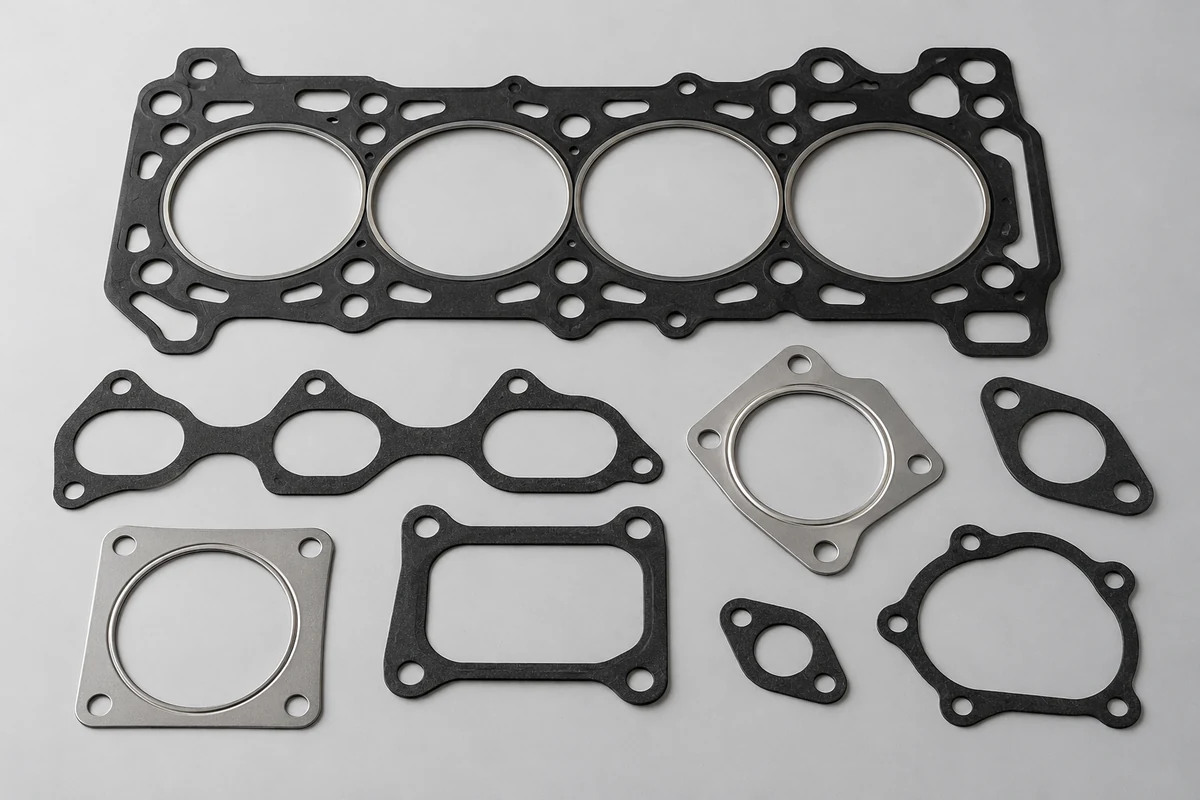
A partially consumed gasket combination does not automatically justify buying the entire combination again. First establish the accepted remaining job scope, which retained items can cover it and whether the exact missing item is individually orderable. If any of those answers is unknown, the cheaper-looking top-up remains a proposal.
This decision starts after the responsible owner has approved the application and required contents. It does not reconstruct an overhaul bill of materials from set names, choose seals or decide whether a used gasket may be reused.
Set names do not establish the remaining gap
Elring's gasket-set FAQ describes head/conversion combinations where full sets are unavailable and individual ordering where those sets are also unavailable. It also states that full parts lists are not public and directs detailed questions to the provider. Reopened on 14 October 2026, this is a reason to ask a specific inclusion question, not proof of an arbitrary combination's completeness. Elring gasket sets
Keep the original accepted set references and any scoped provider answers. A retained gasket must remain attributable to its actual identity and eligibility decision. A new label reading “remaining engine set” cannot supply the missing history.
Distinguish three states: confirmed retained coverage, a confirmed missing required item, and unresolved inclusion or identity. Only the second creates a precisely defined individual purchasing question. The third requires evidence before anyone can claim the repair is covered by a top-up.
Reconcile the job, not the empty spaces in a box
Start with the remaining authorized scope. Some originally purchased items may already have been consumed on completed work, while others may be outside the current job. An empty outline in a tray does not itself establish a new requirement.
For each required item, link confirmed retained coverage to its source set and present eligibility record. Where an earlier consumption entry is unclear, ask the record owner to reconcile it. Do not infer that an unidentified remaining item must be the required gasket because all other positions are accounted for.
Keep any overlap between the original sets explicit. A duplicate-looking item does not authorize a second use or prove the missing item is elsewhere. A scoped provider confirmation can resolve a specific inclusion question without pretending a complete public BOM was available.
Compare an individual purchase with a new set
Obtain an attributable offer for the confirmed missing reference. Verify its actual selling unit, current terms and relationship to the accepted requirement. Individual-order fallback in a manufacturer's general FAQ does not guarantee that this particular item is currently offered separately by this supplier.
For a whole-set alternative, obtain the actual contents answer relevant to the gap and show the other purchased contents as additional supply. Do not assume they have future value, or assume the individual route is cheaper without complete quotes. Unresolved retained stock can change the comparison because the top-up depends on that stock being eligible.
| Field | Evidence to preserve |
|---|---|
| Accepted job scope | Remaining required items from the responsible owner |
| Retained source set | Exact original set and attributable eligible contents |
| Confirmed missing item | Established required reference without retained coverage |
| Individual offer | Current exact item, unit and actual terms |
| Unresolved inclusion | Specific unanswered set or stock question |
| New purchase | Proposed top-up or set with surplus stated |
Fictional example: one missing item, one unanswered item
Assume a fictional remaining job requires items A, B and C under an already approved schedule. Retained A and B are identified, eligible and assigned to this job. C is confirmed missing. A provider offers C individually on the accepted basis. Under those assumptions, the purchase question can be limited to C rather than a repeat of both original source sets.
Now change one fact: B's identity is uncertain. Buying C alone does not establish complete coverage. Keep B's question open and ask the provider or stock owner for attributable evidence. Do not claim the whole job is covered merely because C was the only obviously empty compartment.
If a new set includes C but its B inclusion is unknown, that route also fails to settle the B question. A larger package does not resolve an unknown contents boundary. Ask for a specific answer about the required B before comparing either route as complete.
Preserve the retained-stock basis after ordering
The final record should identify which requirements remain covered by retained stock and which the new purchase addresses. When the individual item arrives, reconcile its identity and supplied unit through the normal authorized process. Do not rename the mixed retained and newly purchased items as a manufacturer-issued full set.
A narrow, documented top-up can avoid duplicating already supported supply. It does not establish technical suitability, authorize reuse or promise that every part for an engine repair has been identified.
Request the identified replenishment
See Engine parts for category context. In an Autoparts sourcing request, identify the approved product and the unresolved replenishment question. The form accepts an 8–1200-character description or supported marketplace link, and up to five PNG, JPEG, WebP or GIF images, limited to 10 MiB each and 20 MiB total. Other technical files need a separately agreed, authorized exchange; the image field is not a PDF, CAD or ZIP portal.
Named manufacturer products are documentary examples, not branded supply offers, affiliation or evidence that another supplier can make or validate an alternative. Independent buying coordination and supplier negotiation do not establish fit, safety approval or guaranteed savings.
Frequently asked questions
Can one missing gasket be bought without repeating both source sets?
Potentially, when the remaining job scope, retained eligible contents and exact missing reference are established and a current individual offer is confirmed. The general possibility of individual ordering does not prove that this item is available separately on acceptable terms.
Does an empty tray position prove a gasket is needed?
No. Use the accepted remaining job requirements and actual consumption history. An empty position may reflect completed work or another scope. It cannot establish a new repair requirement or identify an unmarked item by elimination.
What if the provider will not publish a complete set list?
Ask a scoped question about the exact required item and accepted set references. Retain the attributable answer and its limits. Do not invent a BOM from photographs, broad set names or a statement about a different engine combination.
Can retained and newly purchased items be relabeled as a full maker set?
Not on this purchasing record alone. Preserve each source identity and the approved allocation to the remaining job. A commercial grouping of retained and new items does not create a manufacturer-issued set or technical approval.
Sources
Discuss a sourcing request related to this article.Gasket Reorders: Buy the Confirmed Remaining Gap