
Bonnet air freight: price the non-stackable condition explicitly
Have the provider assess the protected bonnet’s stackability and price that condition explicitly before choosing an air-freight offer.
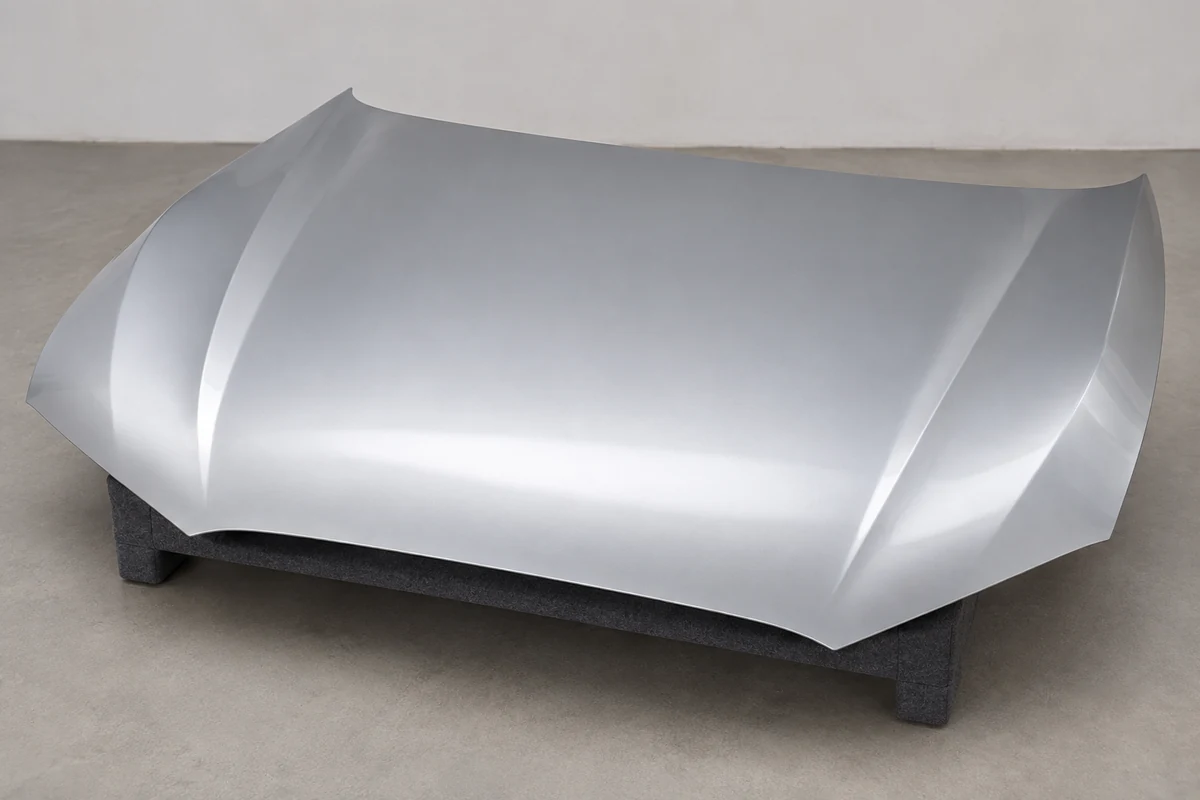
A bonnet air-freight quote can be incomplete even when its weight and dimensions are correct. If the protected load cannot be stacked under the proposed service, that condition needs an explicit provider assessment and price. A flat silhouette or a “do not stack” label is not a documented handling agreement.
Start with the bonnet and packing arrangement the responsible parties actually intend to ship. The purchasing question is whether each air-freight proposal covers that same condition. It is not whether a buyer can redesign the frame or declare it stackable to obtain a lower figure.
Describe the load beyond its footprint
Link the bonnet reference, quantity, protective arrangement and final packed dimensions in one record. Ask the supplier or responsible packing provider to state the known restrictions and the basis for them. Do not convert an unknown load-bearing capacity into permission to place cargo above it.
Give the freight provider this complete description and ask how it will assess the movement. If only a preliminary packing proposal exists, label the quote accordingly. A response based on an ordinary pallet remains provisional when the actual frame is still being specified.
Identify who can resolve a disagreement. A seller may describe the frame as protective while a forwarder prices a general pallet. The buyer needs their descriptions reconciled, with any technical question referred to an appropriately qualified party. Commercial optimism is not evidence of stackability.
Read the air-freight provision that applies
The UPS US Daily Rates guide lists non-stackable and unusually shaped loads among non-conforming freight conditions in its named air-freight section, with potential additional charges and service delays. It is a US-guide example, not a price or acceptance promise for this bonnet's China-origin route. UPS Rate and Service Guide, PDF page 189
Request the actual provider's clause or quotation condition. Ask whether the quoted sum includes its assessed non-stackable or non-conforming treatment, what amount or basis applies, and whether the condition affects the offered service. Do not borrow a parcel surcharge rule for this air-freight decision.
When the answer is “subject to airline confirmation,” preserve that wording. Ask who obtains confirmation and which facts it will cover. A budget estimate can still be useful, provided it is not presented as a bookable service with all conditions settled.
Bonnet handling-condition worksheet
| Record | What belongs in it |
|---|---|
| Bonnet identity | Exact ordered unit and quantity |
| Protected load | Packing revision, outer dimensions and gross weight |
| Stackability assessment | Responsible issuer, evidence and limitations |
| Service proposal | Named mode/service and actual origin/destination |
| Non-conforming treatment | Included charge, separate quote or open condition |
| Approval owner | Person responsible for resolving the remaining issue |
Use one row set per packing proposal. Comparing one offer for a non-stackable frame with another for a stackable crate hides a material scope change. Keep both proposals, but label them as alternatives until the required protection and handling basis have been accepted.
Fictional comparison: the frame omitted from the offer
A fictional seller provides a bonnet price and an initial pallet footprint. The packing proposal later shows a protective frame whose stacking status has not been established. The air-freight offer still describes a standard stackable pallet. No actual engineering finding or freight amount is implied.
The buyer sends the complete proposal back to the freight provider. It asks for an assessed handling description and revised terms while retaining the protective requirement. It does not remove the frame from the record or instruct the warehouse to place another load on top to see what happens.
Suppose the provider returns a conditional non-stackable offer and a second provider has not answered. The first becomes a defined commercial proposal subject to its stated conditions. The second stays incomplete; it does not become cheaper merely because its additional-charge field is blank.
Decide on the assessed condition
Before committing freight money, reconcile the packing revision, provider assessment and quotation. Have the responsible parties identify any unresolved acceptance condition and the action needed to close it. Preserve the stated service qualifications without inventing a delay allowance or guaranteed transit time.
If the frame changes, reopen the affected review. The record should make it clear why the quote changed and who assessed the new proposal. The result is a price for the protected bonnet the buyer intends to receive, rather than a low price for an assumed pallet.
The primary guidance cited here was checked on 14 October 2026. Recheck the applicable current rules and provider terms before committing to the actual shipment.
Keep the buying enquiry within scope
For product context, see Body parts. The Autoparts sourcing request can start an independent aftermarket or unbranded buying enquiry with a short description or supported product link. It accepts up to five PNG, JPEG, WebP or GIF images, at most 10 MiB each and 20 MiB total; descriptions are 8–1200 characters. Arrange other documents through a separately agreed, authorized exchange. The form is not a PDF, CAD or ZIP portal.
Supplier information and negotiation do not establish product suitability, specialist transport acceptance or customs approval. Keep those decisions with the responsible qualified parties. No freight service, branded-product offer or guaranteed outcome is implied here.
Frequently asked questions
Does a non-stackable sticker guarantee how my bonnet will travel?
No handling guarantee is established by this article. Request the provider’s written assessment and service terms for the exact protected load. A label does not replace that agreement.
Is non-stackable air freight the same as an oversized parcel?
They are different service and rating questions. Use the air-freight provider’s terms for the bonnet load instead of transferring parcel surcharge thresholds or priorities.
Can I compare a stackable-crate quote with a non-stackable-frame quote?
Keep them as separately described proposals until the relevant parties establish that both satisfy the purchase and protection requirements. An unapproved packing change should not disappear inside a price comparison.
What if the provider cannot confirm the handling condition yet?
Retain the offer as conditional and name the outstanding information and decision owner. Do not present a preliminary air-freight estimate as final acceptance or invent the missing charge.
Sources
Discuss a sourcing request related to this article.Bonnet air freight: price the non-stackable condition explicitly