
Clutch Handover: The Pilot-Bearing Work Decision
Keep pilot-bearing applicability, inspection findings and any authorized related work distinct from delivery of a complete clutch kit.
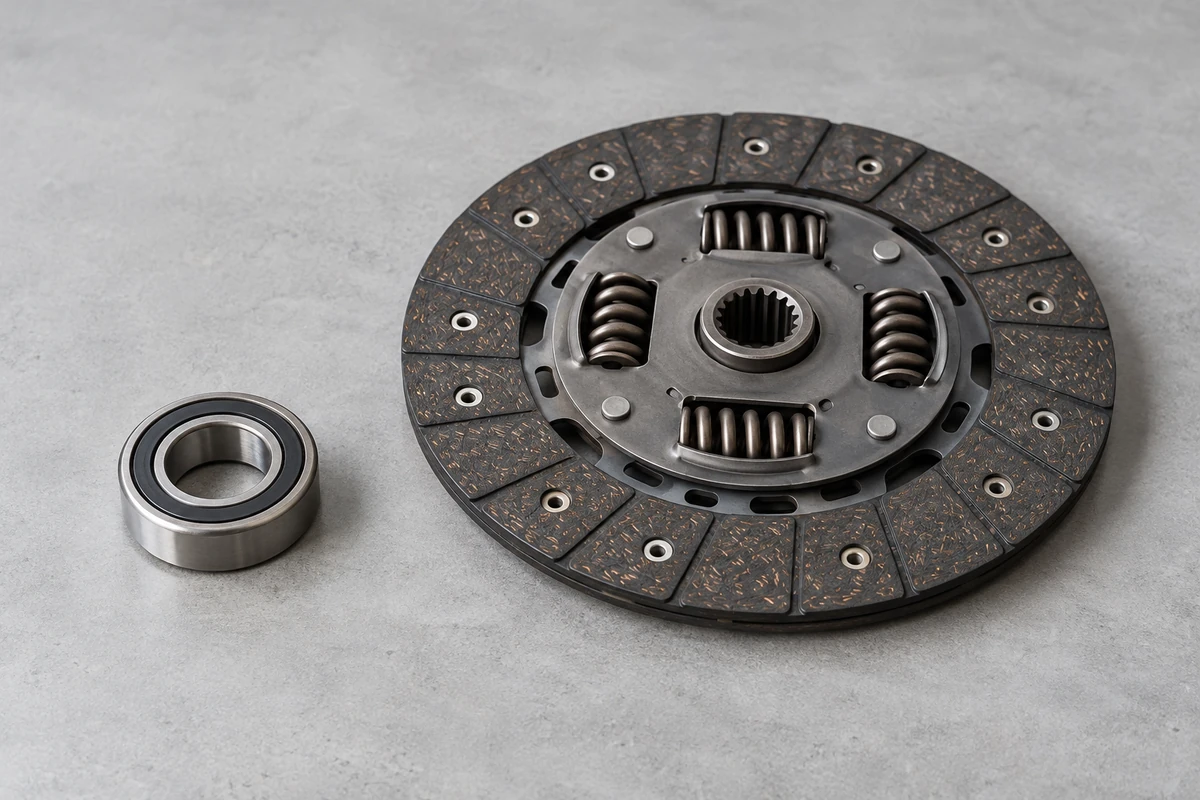
A complete clutch kit does not tell the next workshop what happened to the pilot-bearing inspection decision. Where that component and related work apply, the handover should show who assessed it, what finding was recorded and whether any resulting work was authorized. A kit-count tick cannot supply those answers.
This article concerns a conditional related-work decision during an established clutch job. It does not teach inspection, prescribe replacement or assume that every clutch application has the same bearing arrangement.
Preserve the conditional part of the source
ZF Aftermarket's passenger-car clutch page calls for pilot-bearing inspection during clutch replacement and replacement if required. Checked on 14 October 2026, the statement distinguishes assessment from a conditional work decision. It is not a universal instruction to add a new bearing to every order. ZF pilot-bearing section
The actual application needs its own current requirement and qualified provider. A catalogue section cannot establish the condition of the buyer's component, identify an unknown bearing arrangement or authorize an additional purchase.
Ask about applicability before treating absence as omission
Link the clutch job to its established vehicle and assembly record. Ask the qualified provider to identify whether the pilot-bearing question applies and the relevant current instruction. If the applicable arrangement is not established, keep that question open rather than declaring the workshop omitted a bearing.
A provider's supported non-applicability answer is different from no response. Retain the basis so a later recipient understands why the related-work field is closed or excluded. Avoid a standard template that forces every job to show replaced when the actual decision may legitimately differ.
The clutch kit's bill of materials belongs in the parts-supply record. A kit without a bearing may match the agreed purchase, while a separate service decision about an existing bearing remains necessary. Conversely, a supplied bearing does not prove that a qualified assessment was made or that related work was authorized.
Separate finding, recommendation and authorization
Ask the inspection owner for an attributable finding within the agreed scope. Retain the report or job-note reference and the person responsible for its interpretation. The buyer should not convert a vague remark into an acceptable-condition result or devise a visual criterion to finish the file.
If the provider recommends additional work, record it as a recommendation until the appropriate owner authorizes the actual scope and terms. A technical recommendation does not by itself approve spending. An approved purchase likewise does not establish that the recommended work was completed.
Use separate entries for the qualified finding, proposed related work, commercial authorization and completed-work evidence. This prevents a yes in the authorization column from being read as a technical pass, or an order confirmation from being read as a workshop result.
Conditional related-work worksheet
| Field | Record needed | Decision it supports |
|---|---|---|
| Clutch application | Actual vehicle/assembly and job identity | Which related component question applies? |
| Pilot-bearing applicability | Qualified answer and current requirement | Required review, not applicable or unresolved? |
| Inspection responsibility | Accepted provider and scope | Who owns the finding? |
| Attributable finding | Actual report and qualified interpretation | What has been established about this job? |
| Related-work authorization | Approved scope and terms, if proposed | Has a recommendation become authorized work? |
| Completion or open decision | Result reference or named remaining owner | What should the next recipient know? |
The worksheet supplies no inspection technique or replacement threshold. It maps a conditional decision so the buyer can coordinate the actual proposal without becoming the technical decision-maker.
Fictional case: kit delivered, related work undecided
A fictional job C receives the ordered clutch kit. Workshop W has accepted the applicable inspection task and records a finding that leads it to propose related work on bearing P. The buyer's packet shows the kit invoice and W's proposal, but no authorization or completion record. All identifiers and events are invented.
The buyer keeps kit delivery complete against its own scope while referring W's proposal to the authorized decision owner. It does not mark P replaced merely because the parts order is closed, and it does not interpret the proposal as permission to add a charge.
Suppose the owner approves the exact related-work proposal. Update authorization, then await the provider's attributable result. If the owner requests clarification instead, retain the proposal and the open decision without rewriting W's original finding. Neither path turns the catalogue example into a mandatory replacement policy.
Hand over the decision trail
The recipient should see whether the pilot-bearing question applied, who assessed it and how the resulting proposal was handled. A decision to proceed, defer or seek clarification needs its actual scope and authority, not a generic parts-complete label. Keep any unresolved technical consequence with the qualified owner; this document does not grant operational release or settle a warranty question.
Keep the purchasing enquiry focused
For category context, see Engine parts. In an Autoparts sourcing request, identify the actual part and the unresolved handover question. The form supports an 8–1200-character description or a supported marketplace HTTPS link, and up to five PNG, JPEG, WebP or GIF images, limited to 10 MiB each and 20 MiB combined. PDF, CAD and ZIP files need a separately agreed, authorized exchange.
Independent aftermarket or unbranded buying coordination and supplier negotiation do not establish service-provider capability, fitment, engineering approval or a ready-for-use vehicle. Named manufacturers above are documentary examples, with no affiliation or branded-goods offer implied.
Frequently asked questions
Does every clutch kit need to contain a pilot bearing?
The actual kit’s agreed contents determine supply completeness. The pilot-bearing service question is separate and application-dependent. A conditional related-work decision should not be turned into a universal kit-content requirement.
Does ZF’s inspection statement mean automatic replacement?
No. The cited section distinguishes inspection from replacement if required. The actual application and qualified finding must determine the related-work question; the buyer should not add a mandatory replacement solely from the catalogue example.
Is a workshop recommendation enough to authorize extra work?
Keep the qualified recommendation and its evidence, then obtain the actual scope and commercial authorization from the responsible owner. A proposal is not itself spending approval, and approval is not completed-work evidence.
What remains open after the clutch kit has been delivered?
Any applicable inspection finding, related-work decision or completion evidence that has not been established. Close parts delivery only against its agreed supply scope and carry the remaining service question under a named owner.
Sources
Discuss a sourcing request related to this article.Clutch Handover: The Pilot-Bearing Work Decision