
EGR Handover: Preserve the Unresolved Failure Cause
Pass recurring EGR complaints, attributable deposit findings and open cause-review responsibility to the next provider without diagnosing the vehicle.
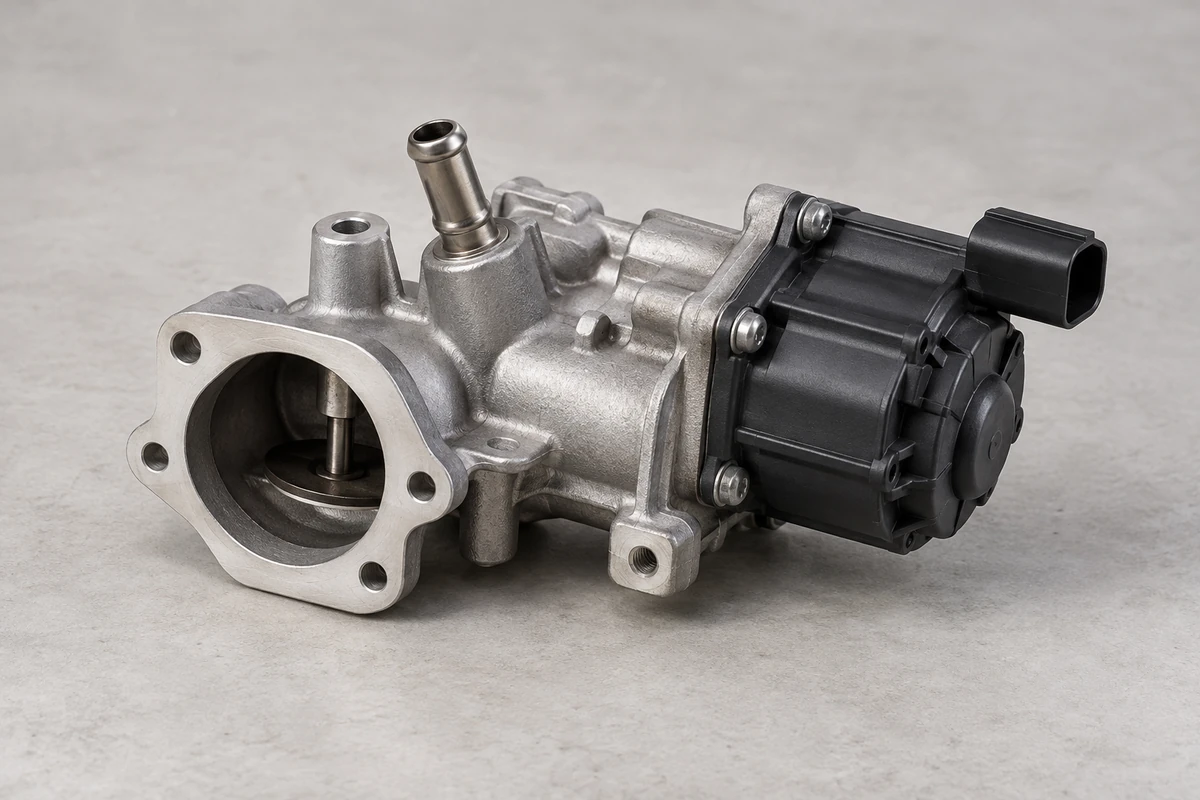
When another EGR valve is ordered after a recurring complaint, the replacement should not become a substitute for the unresolved cause record. Give the receiving provider the complaint chronology, attributable findings and the precise question still open. A fresh valve invoice says what was supplied; it does not show why the earlier problem occurred or whether that question was investigated.
The buyer's role is to prevent a cause-review gap from disappearing between a parts seller and a workshop. This article does not diagnose deposits, prescribe cleaning or driving, assign fault, or determine a warranty outcome.
Read the application-specific example carefully
Delphi's EG10599 article describes vehicle-induced carbon fouling and notes independently restricted EGR passages in its named Honda Fit and CR-Z discussion. Checked on 14 October 2026, this is a source-specific reason to preserve a cause question, not a diagnosis of every repeat EGR complaint. Delphi EGR carbon-fouling article
Do not copy the manufacturer's general explanation into a customer's file as an observed finding. A report that an old valve has deposits, a conclusion about their cause and a decision about the new part are separate statements with different evidence requirements.
Build a chronology that does not choose a culprit
List the prior complaint, the identified replacement event and the later recurrence using existing records. Preserve the description used by the person who reported each event. Similar wording on two job cards does not prove that the same failure mechanism recurred.
Attach any existing qualified findings to the event they describe. Record whether a passage or broader system review was actually reported, merely proposed or not addressed in the available packet. A blank report field should be labelled no record supplied, rather than inspection not performed.
Avoid a chronology built only around purchase dates. The date the valve was bought is not necessarily the date it was fitted or the date a complaint reappeared. If those dates matter to the responsible reviewer and remain uncertain, keep the uncertainty visible instead of filling it from an invoice.
Distinguish three different unanswered questions
First, what condition was observed on the earlier component or system, and by whom? Second, what cause conclusion, if any, has a qualified person recorded? Third, what task has the next provider accepted before closing the replacement job? A general reassurance that the new valve is better does not answer any missing link.
Ask the receiving workshop to state which prior findings it has reviewed and which unresolved cause question remains within its assignment. If the workshop has only accepted installation, a diagnostic responsibility cannot be added silently to that scope. Obtain the relevant proposal and authorization through the actual arrangement.
Keep commercial discussions in a parallel record. A seller might propose a replacement or credit without making a cause finding. Acceptance of that proposal should not be rewritten as an admission of manufacturing defect, nor should the Delphi example be used to deny a claim.
Recurrence and cause-review worksheet
| Field | Record to carry forward | Question for the next owner |
|---|---|---|
| Valve and application | Established reference and actual vehicle scope | Does the earlier evidence cover this application? |
| Complaint chronology | Attributable reports and known event dates | Are repeated descriptions being confused with diagnosis? |
| Deposit evidence | Existing finding and its issuer | Was a condition observed or merely suspected? |
| Passage/system review | Reported scope, proposed scope or missing record | What related question remains unaddressed? |
| Diagnosis responsibility | Named qualified provider and agreed task | Who has accepted cause review? |
| Open conclusion | Unresolved question and record expected | What would make the handover complete? |
These fields are an editorial aid to asking better questions. They are not a troubleshooting tree and contain no tests, fault-code interpretation or service procedure.
Fictional case: a second valve closes the wrong issue
A fictional buyer receives a replacement valve V-2 after Workshop B reports a recurring EGR complaint involving V-1. The seller agrees to supply V-2 as a commercial accommodation. B's packet includes an attributable deposit observation but does not state whether the relevant passages were included in its cause review.
The buyer forwards the accommodation record and deposit finding under their own headings. It asks B to clarify the review scope and identify the unresolved cause owner. The replacement does not close that query, and the observation does not establish that V-1 was defective or that the vehicle caused the problem.
If B later confirms that its earlier report was limited to the removed valve, the gap becomes more precise. The buyer has a scope answer, not a new diagnosis. Any additional assessment requires a qualified provider's proposal; nobody is asked to clean passages or conduct a road trial from this worksheet.
Preserve the question until a responsible answer exists
The final packet should allow the next provider to see what is known, what is merely reported and what cause conclusion remains open. Once an attributable answer arrives, record its scope and remaining qualifications. Do not expand it into a universal rule about EGR reliability or make operational decisions on the strength of administrative completeness.
Keep the purchasing enquiry focused
For category context, see Engine parts. In an Autoparts sourcing request, identify the actual part and the unresolved handover question. The form supports an 8–1200-character description or a supported marketplace HTTPS link, and up to five PNG, JPEG, WebP or GIF images, limited to 10 MiB each and 20 MiB combined. PDF, CAD and ZIP files need a separately agreed, authorized exchange.
Independent aftermarket or unbranded buying coordination and supplier negotiation do not establish service-provider capability, fitment, engineering approval or a ready-for-use vehicle. Named manufacturers above are documentary examples, with no affiliation or branded-goods offer implied.
Frequently asked questions
Does a recurring EGR complaint prove that the new valve is faulty?
No. Preserve the reported recurrence and the qualified findings without selecting a cause from the complaint alone. The receiving provider needs to assess the actual application and evidence; an invoice or repeated symptom description is not a diagnosis.
Can Delphi’s carbon-fouling article be used to reject a warranty claim?
The cited application-specific discussion does not decide a particular claim. Keep the observed condition, cause assessment and commercial or warranty decision separate. A general manufacturer example cannot establish what happened to the buyer’s valve.
What should be recorded when no passage-review report is supplied?
Record the absence of that evidence and ask the responsible provider what its earlier assessment covered. Do not conclude that the work was omitted, prescribe cleaning or invent a result to complete the handover.
Does receiving a replacement close the cause-review task?
It can settle the agreed parts-supply action while leaving diagnosis unresolved. Retain the cause question under its named owner and ask for an attributable scoped answer. A commercial accommodation does not establish fault or authorize additional workshop work.
Sources
Discuss a sourcing request related to this article.EGR Handover: Preserve the Unresolved Failure Cause