
Transmission-Fluid Reorders: Compare Container Mixes
Compare confirmed containers against authorized fluid-specific demand, with existing eligible volume and leftover volume shown separately.
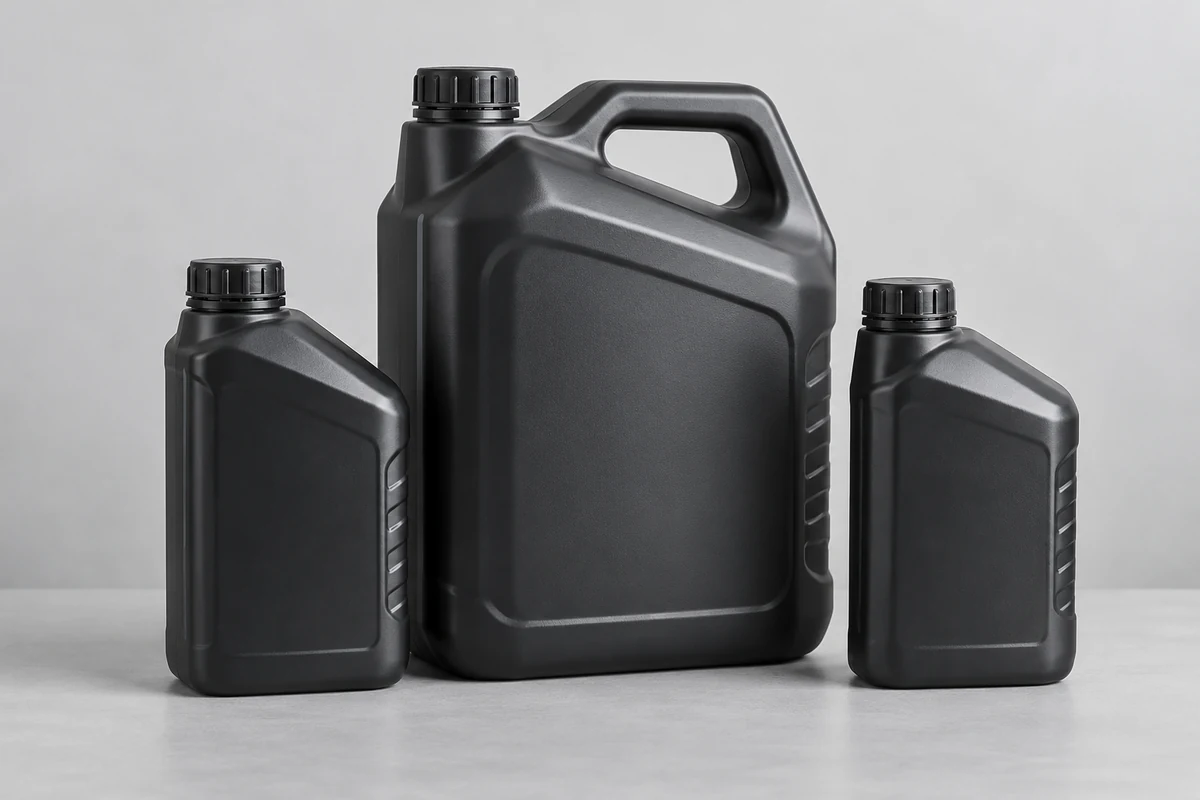
A larger transmission-fluid container can reduce the number of purchase units while increasing the volume left after the planned work. Compare container combinations only after the exact fluid and required commercial quantity have been established by the responsible owner. Liters of another grade cannot close the gap.
This is a purchasing calculation. It does not choose fluid, determine a transmission's fill amount, authorize mixing or provide storage and decanting instructions.
Container choices belong to particular fluids
ZF's global English oil page lists different container-size ranges for different named fluids. For example, its listing includes several sizes for LifeguardFluid 8 but only a one-liter entry for LifeguardFluid 9. The page was reopened on 14 October 2026. These are catalogue descriptions, not a supplier stock promise or evidence that a large size exists for every grade. ZF transmission oils and kits
Ask the actual provider which sealed commercial containers of the approved fluid it offers now. Retain the exact product reference, labeled size and number of containers. Do not transfer a size from another fluid merely because both belong to the same brand.
Where a job already includes purchased oil in a kit, reconcile that allocation before adding standalone fluid demand. An included quantity should cover its identified requirement once, not appear as both free stock and supply reserved within a kit.
Establish the volume that can actually be applied
Start with the authorized quantity for the defined group of jobs and dates. Keep the technical source for that quantity outside the container calculator but linked to it. The buyer should not infer service quantities from the number of bottles in a catalogue kit.
Existing volume needs an established eligibility and allocation basis. Record unopened or previously opened stock according to the responsible product guidance and decision; this article supplies no post-opening life or assessment method. An estimated remainder in an unidentified container is not a reliable credit against a new purchase.
If the stock figure already excludes reserved volume, do not subtract that reservation again. If demand includes a job with its own reserved oil, either retain both sides or remove the matched coverage together. Grade-specific quantities must remain separate throughout.
Compare discrete container offers
For each confirmed format, multiply container count by labeled size. Compare the sum with the uncovered authorized volume and show the excess. Use only actual offered whole units and increments; do not invent a half-drum sale to produce an exact answer.
A smaller remainder is a useful result, not a universal cost winner. Complete quotes may differ in total price, delivery and other disclosed terms. Ask the responsible owner whether the larger format is acceptable under the actual handling and use arrangements rather than assuming purchasing convenience settles it.
| Field | Entry |
|---|---|
| Approved fluid | Exact grade/product and authorization reference |
| Authorized quantity | Job-linked quantity and dates, already technically established |
| Usable existing volume | Eligible matching volume and allocation basis |
| Confirmed pack size | Actual container identity and labeled volume |
| Ordered volume | Container count multiplied by confirmed size |
| Remainder | Volume beyond uncovered demand, with no assumed future credit |
Fictional example: thirteen liters uncovered
Assume an invented plan requires 17 liters of already approved fluid F-A across defined jobs. Four liters of matching eligible uncommitted stock are available for those jobs. The uncovered commercial quantity is 13 liters. These figures are not service-fill recommendations or ZF product quantities.
Suppose the provider confirms one-liter and twenty-liter containers of F-A. Thirteen one-liter containers cover the gap without a volume remainder. One twenty-liter container leaves seven liters beyond current demand. Both proposals require their own complete actual quotation and acceptance of the supplied format.
If the twenty-liter offer is for F-B instead, it is outside this comparison. Neither a lower price per liter nor a familiar brand makes it coverage for F-A. If F-A is supplied only in a confirmed six-bottle case, three cases of one-liter bottles supply 18 liters and leave five beyond the 13-liter gap; that different increment must be explicit.
If the four existing liters later lose their supported eligibility, reopen the gap as 17 liters. Do not retain a fictional four-liter credit to preserve the previously preferred offer. Record the changed input and ask the purchasing owner whether the proposed quantity should change.
Release a container-specific order
The final proposal should name fluid, container reference, size, count, total nominal volume and planned remainder. It should also identify any unresolved eligibility or delivery condition. That lets receiving compare the promised commercial supply without confusing the invoice quantity with instructions for filling a vehicle.
Request the identified replenishment
See Engine parts for category context. In an Autoparts sourcing request, identify the approved product and the unresolved replenishment question. The form accepts an 8–1200-character description or supported marketplace link, and up to five PNG, JPEG, WebP or GIF images, limited to 10 MiB each and 20 MiB total. Other technical files need a separately agreed, authorized exchange; the image field is not a PDF, CAD or ZIP portal.
Named manufacturer products are documentary examples, not branded supply offers, affiliation or evidence that another supplier can make or validate an alternative. Independent buying coordination and supplier negotiation do not establish fit, safety approval or guaranteed savings.
Frequently asked questions
Can a larger container of another transmission fluid cover the shortage?
No purchasing calculation establishes that substitution. Keep each approved fluid in its own demand and stock pool. A different fluid requires a separate applicable technical decision before it can enter coverage, regardless of price or nominal volume.
Does a kit’s bottle count establish the required service fill?
No. It describes supplied commercial quantity. The required amount for the actual service must already be established by the responsible technical source. Reconcile any kit allocation once, without treating it as both free stock and reserved supply.
Is the smallest leftover volume always the cheapest choice?
No. Compare complete current offers and the actual accepted container formats. Show the leftover explicitly without assigning invented future use or resale credit. A format also needs to be acceptable under the responsible handling and use arrangements.
May an opened-container remainder reduce a reorder?
Only supported matching volume with an applicable eligibility decision should be used. Preserve product identity, known history and allocation. This article provides no opened-container life, condition test or permission to mix, decant or repackage fluid.
Sources
Discuss a sourcing request related to this article.Transmission-Fluid Reorders: Compare Container Mixes