
Read Air Filter Pleat and Glue-Line Condition Against the Approved Design
Compare air-filter glue patterns with the approved construction while keeping torn media, collapsed pleats and frame concerns as separate receiving questions.
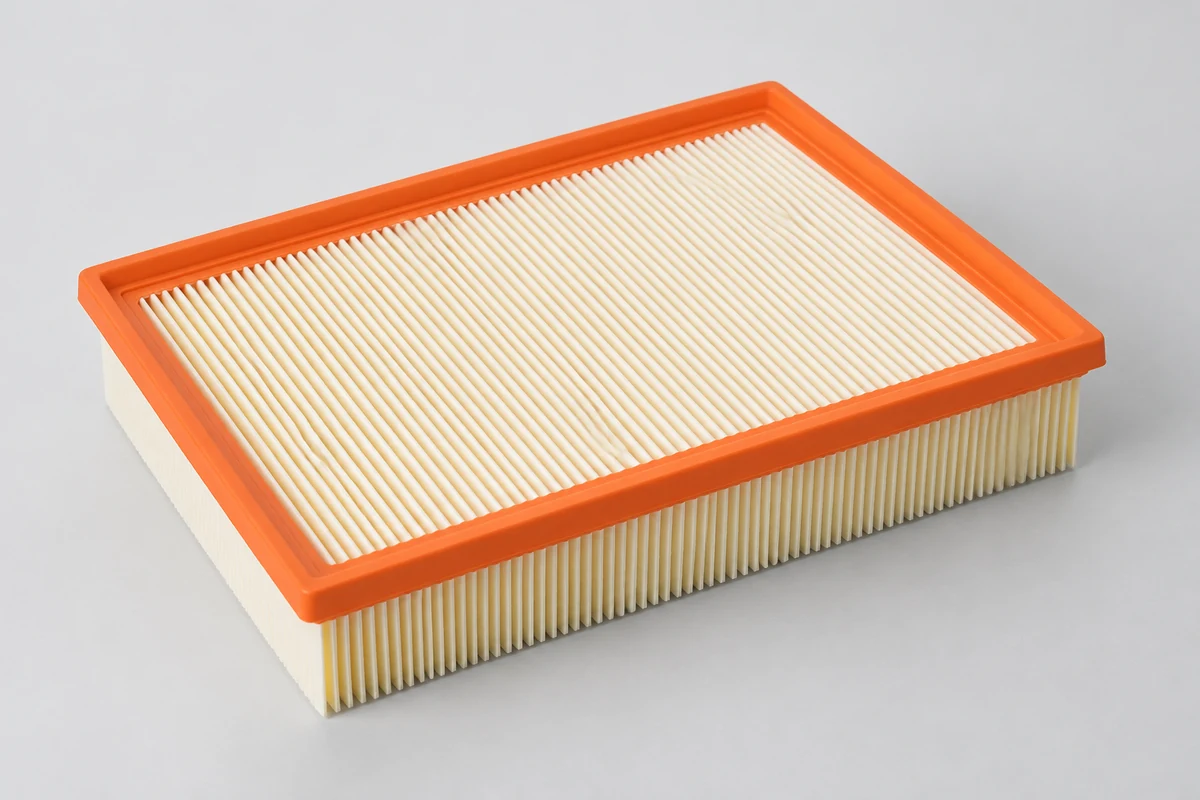
A visible glue line on a new engine air filter is not automatically excess adhesive. Some filter constructions intentionally use glue to support their pleats. The useful receiving decision is whether the observed pattern belongs to the approved design, and whether a separate tear, collapsed fold or frame concern is present beside it.
Do not reject every line of glue or accept every media anomaly under the same explanation. Keep the design comparison and the condition observation in separate fields. This article concerns an already specified filter, not selection of filtration media or a performance comparison between brands.
Establish the intended pattern before calling it a defect
MANN-FILTER describes spiral-wound glue-string technology as a way of keeping pleats consistent and maintaining filter shape. This is evidence that glue can be intentional construction. It does not establish that every filter needs that pattern or that an unknown supplier’s deposit is acceptable. MANN-FILTER engine air-filter designs
Use the actual approved product drawing, construction description or accepted reference images. Identify which side and orientation each image shows. A reference from another filter in the same family may use a different support pattern and should not silently become the baseline.
If the order has no usable glue-pattern reference, record that gap. The receiver should not invent a universal maximum bead width or decide that regular spacing proves correct manufacture. Ask the supplier and responsible technical owner to identify the intended construction for the delivered model.
Compare the glue pattern and the media independently
A repeated support line may be consistent with the approved design while a single adjacent pleat has a visible tear. Conversely, a lump whose purpose is unclear may be present without an observable media tear. Describe each feature rather than combining them into one “glue defect” diagnosis.
Record the pleat location using a visible frame corner or another stable feature in the approved view. Keep a whole-filter image linked to the detail so the supplier can locate the concern. Do not count a fold hidden by the frame as intact merely because adjacent folds look orderly.
Use available views of each accessible side within the agreed handling scope. Do not stretch the media, unfold the pleats, cut the glue string or peel it away to discover what is underneath. That would change both the structure and the evidence. Where an area is obscured, state the limit and leave the question for the appropriate assessment.
The frame and sealing edge remain separate subjects. An approved glue pattern does not explain a visible frame crack or displaced edge. Equally, a tidy frame cannot establish the condition of hidden media. Keep the observations attached to the same identified unit without merging their conclusions.
Ask a more useful question than “is this glue normal?”
Ask whether the particular pattern and location correspond to the delivered model’s approved construction, then ask separately about the identified media anomaly. A response describing the function of glue in general is background only. It should not close a torn-pleat issue that the response never addresses.
Request a product-specific reference that the responsible reviewer can reconcile with the order. If the supplier says a pattern changed during production, ask for the revision record and whether that change was authorized. A production explanation is not automatically an accepted change to the purchased design.
No appearance comparison proves filtration efficiency, dust capacity or sealing performance. These require their own applicable evidence. The worksheet below clarifies which visual questions remain; it does not convert a design explanation into a performance certificate.
An intentional-feature versus damage worksheet
Use separate entries where one unit has more than one concern. This original worksheet defines no adhesive tolerance or destructive check.
| Item | What to compare | What to preserve as unresolved |
|---|---|---|
| Construction reference | Exact model, revision and viewed side | Whether an example image actually covers this design |
| Glue pattern | Visible path and repeated or isolated features | Purpose of an undocumented deposit |
| Pleat position | Location relative to a frame feature | Whether a fold is displaced beyond agreed criteria |
| Media condition | Visible tear, collapse or obscured area | Extent beneath glue or another concealed region |
| Frame/seal edge | Separate accessible condition observation | Any independent frame or sealing question |
| Affected units | Unit IDs and their individual concerns | Condition of units not examined |
A blank criterion should stay blank with an assigned question. Adding a guessed percentage of allowable collapsed pleats makes the form look complete while introducing an unauthorized acceptance rule.
Fictional counterexample: intentional glue does not excuse a tear
Imagine fictional filters F-A and F-B supplied against an approved spiral-support pattern. F-A’s visible pattern follows the documented reference. F-B has a localized glue lump and a visible torn pleat alongside it. These observations and identifiers are invented, with no real manufacturing result implied.
The seller explains that spiral glue is part of the design. That response is relevant to F-A’s pattern, but it does not address F-B’s torn media or the isolated lump. The buyer keeps F-B held for a response to those specific locations rather than rejecting every glue line in both units.
If the supplier confirms that the lump is intended but offers no explanation of the tear, only the lump question has advanced. The tear remains open. If the supplier offers to replace F-B, the replacement must be documented as a new delivered unit. Neither response justifies a claim that F-A meets all filtration requirements.
This example also prevents the opposite error: removing all visible glue because a receiver assumes a filter should contain paper alone. The product’s authorized construction should control the comparison, not a preference for a neater-looking surface.
Preserve a narrow, usable outcome
The final record should state which features were explained by applicable design evidence, which departures were assessed and which conditions remain unknown. A negotiated credit can resolve a commercial issue without establishing that a torn filter is suitable for use. Any accepted design revision must be explicit rather than retrospectively written into the original arrival record.
Keep the buying request tied to the actual part
For category context, see Engine parts; the supplier-check guide covers the earlier supplier review. Independent aftermarket or unbranded sourcing and authorized drawing-based proposals require their own product evidence. The manufacturer cited here is a documentary example, not an affiliation, branded-goods offer or endorsement of another supplier.
Start an Autoparts sourcing request with the exact received reference and the unresolved question. The form accepts an 8–1200-character description and up to five PNG, JPEG, WebP or GIF images, at most 10 MiB each and 20 MiB total. PDF, CAD and ZIP uploads are not supported. Arrange other technical files through a separately agreed, authorized exchange. Buying coordination and supplier negotiation do not establish an owned laboratory, an inspection service, engineering approval or a guaranteed remedy.
Frequently asked questions
Is a glue line across filter pleats necessarily a defect?
No. MANN-FILTER documents an intentional glue-string construction. That example only defeats the assumption that all glue is unwanted; the delivered filter still needs comparison with its own approved design and relevant condition criteria.
Does an approved glue pattern clear a nearby torn pleat?
No. The support pattern and the media tear are separate observations. Ask for a response to the identified tear even when the purpose of the glue has been explained. A construction feature cannot silently close an independent damage concern.
Can I peel back glue to see whether the media underneath is damaged?
Do not peel, cut or unfold the filter for this receiving review. State which area is obscured and preserve the supplied condition. Any further assessment needs an agreed competent method and responsibility outside this editorial worksheet.
What if the supplier says the glue arrangement changed recently?
Ask for the exact revision, the affected product and the basis on which the change was authorized for this order. A later production explanation does not automatically amend the approved design or demonstrate filtration performance.
Sources
Discuss a sourcing request related to this article.Read Air Filter Pleat and Glue-Line Condition Against the Approved Design