
Wiper Blade RFQ: Side, Heating and Price per Piece
Specify wiper blade side, required heating option and pieces per quote line so that an inexpensive pair does not conceal the wrong equipment.
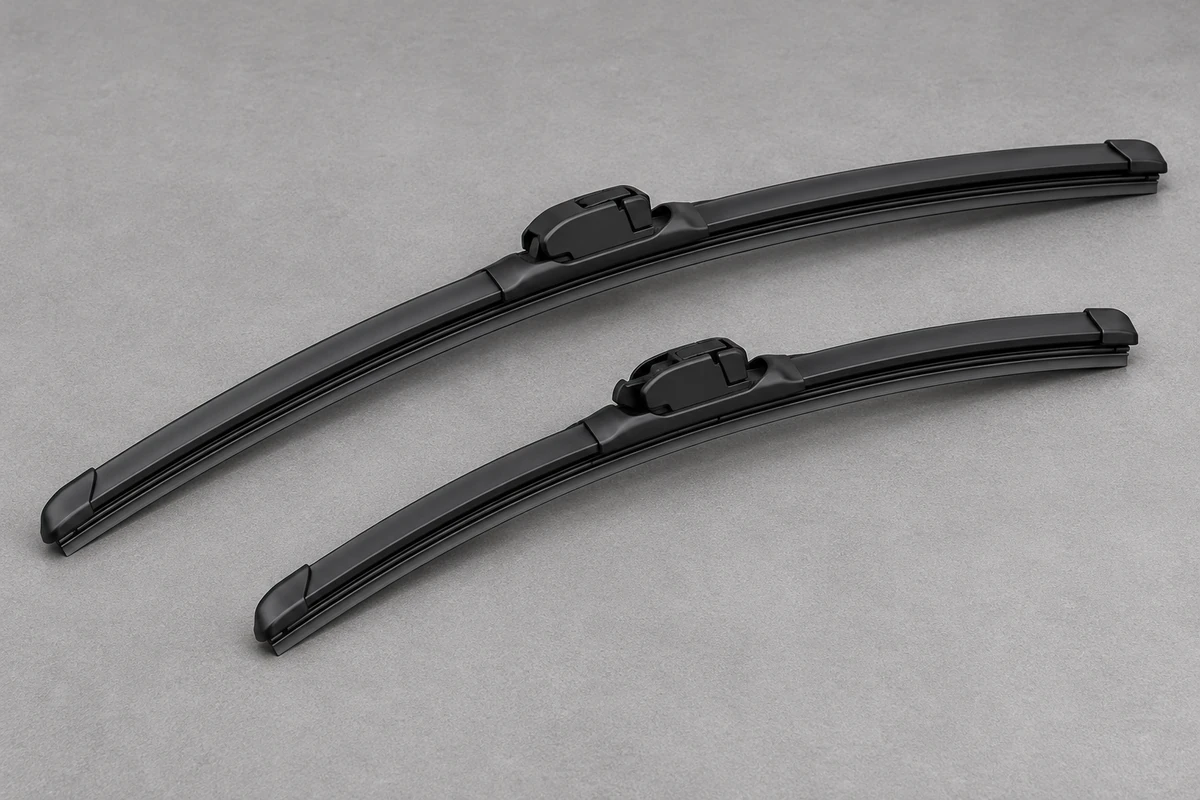
A wiper-blade listing can combine several decisions in one selector: vehicle application, side, equipment option and number of pieces. Keep those decisions separate in the request for quotation. Two blades in a packet do not make the packet correct if the required heated option or side is wrong.
First establish the actual vehicle equipment and the blade reference accepted for it. Heating is an application requirement to confirm, not an optional feature to remove because another listing is cheaper. This article compares purchase scope and leaves installation, conversion and operation outside the buying decision.
Read the option restriction before the quantity box
Lucid’s official Air wiper-blade page has separate type and side selections, states that pieces are sold individually, and limits its heated blades to vehicles configured with the Comfort and Convenience Package. This is a named vehicle example of three independent quote fields. It is not a universal package name or compatibility rule for aftermarket blades. Lucid Air wiper-blade listing
For another vehicle, use that vehicle’s actual equipment record. Do not transplant Lucid’s option wording into an unrelated RFQ. Record the required heating state in plain terms and retain the evidence that established it. If the equipment is unknown, ask for clarification before requesting a “heated equivalent.”
Side terminology also needs an explicit reference. Preserve the catalogue’s wording and the application context rather than silently converting driver/passenger into a universal left/right assumption. A side label without its vehicle or market context can leave the request ambiguous. Confirm what the supplier’s proposed SKU means for this request.
Keep three quote lines even when the supplier sells a set
The first line identifies the exact blade and side. The second identifies its required heating option and application/attachment evidence. The third states the pieces supplied in the quote unit. A supplier can provide these within one bundle price, but none should disappear into “pair.”
If the buyer wants both sides, list each required side and its quantity inside the requested set. Ask whether the offered bundle contains those exact variants. If the buyer needs one side only, show the other side as excluded or optional. Do not assume extra pieces are valuable inventory simply because the bundle costs less per piece.
A photo can show a pair without proving which variants are included. A broad blade-length statement is also insufficient to establish the required attachment and application. Request the product-specific evidence rather than improvising an adapter or treating an electrical connector as a compatibility certificate.
A side-and-option purchasing worksheet
| Field | Buyer input | Supplier response needed |
|---|---|---|
| Vehicle equipment | Authorized application and relevant option record | Exact offered SKU and stated application |
| Blade side | Required side using controlled reference wording | Side of every included blade |
| Heating state | Required heated/nonheated configuration | Offered configuration, with any deviation explicit |
| Attachment/application | Approved reference and required evidence | Product-specific documentation or unresolved gap |
| Quote unit | One blade or a defined two-side set | Piece count and line-item identities |
| Exclusions | Other side or accessories not requested | Anything omitted from the priced scope |
Complete the sheet for each offered variant. If one supplier provides both a nonheated pair and a heated single blade, retain two records. Combining the pair’s price with the heated version’s description creates a nonexistent offer.
Fictional comparison: the inexpensive pair answers the wrong question
Suppose a fictional buyer needs the established heated blade for one specified side. Offer A quotes a nonheated pair. Offer B quotes one heated blade for the requested side but has not supplied the requested attachment/application evidence. The example contains no real prices and no accepted product.
A’s extra blade cannot compensate for the changed heating scope. Dividing its price by two does not turn it into a matching quote. Ask A whether it can supply the required side and heating variant; if not, mark the offer as outside the baseline. Do not suggest converting the vehicle or disabling its required function to use the pair.
B answers the side and heating questions but remains conditional on the missing evidence. The buyer can request a clarified offer from B without declaring that the single blade will fit. If B later proposes a different attachment, that is a changed product proposal, not a routine commercial revision.
For a buyer who actually needs both sides, the same reasoning runs in the other direction: a single-blade quotation is not a complete set price. The missing side needs a real matching offer. A buyer should not infer it is included because the seller’s heading uses the plural “blades.”
Ask for a better price on the right item
Request same-side, same-option pricing at the intended quantities. Compare a defined set with separately itemized blades only after the identities and required evidence align. Commercial negotiation can address the price and order terms; it cannot silently change the equipment requirement.
For an independent aftermarket candidate, ask the supplier to identify its actual product and substantiation. A named vehicle maker’s retail listing illustrates the question but does not authorize branded sourcing, demonstrate an unknown factory’s capability or support borrowed performance claims. The useful result is a quote whose side, option and supplied count can be reviewed without guessing.
Prepare the sourcing request
For the broader product group, see Body parts. If the application is not established, start with the OE and application identification guide before asking for a substitute.
Use the Autoparts sourcing request to describe the required item and the particular question left open above. The form accepts a description of 8–1200 characters and up to five PNG, JPEG, WebP or GIF images, limited to 10 MiB each and 20 MiB total. It does not accept CAD, PDF or ZIP attachments. Authorized drawing images can start a discussion; arrange other technical files separately through an actually agreed, authorized exchange.
Keep requests for independent aftermarket or unbranded alternatives tied to the authorized application or drawing. Supplier negotiation and a drawing-based proposal do not establish engineering acceptance, actual manufacturing capability or guaranteed savings. Named catalogue products in this article are documentary examples, not branded-goods offers or approvals of an unknown alternative.
Frequently asked questions
Are wiper blades normally priced as a pair?
Do not assume so. Check the specific offer’s piece count and exact included sides. A listing may use a plural title while selling individual blades. State whether your request is for one side or a defined set, then obtain a quote on that basis.
Can a nonheated pair be a cheaper substitute for one heated blade?
It is a different scope when the authorized requirement calls for heating. Extra quantity does not resolve that difference. Ask for the required heated variant and side; do not treat the nonheated offer as matching or plan a conversion to make it usable.
What if driver side and left side appear in different supplier replies?
Keep the original wording and verify it against the actual vehicle and market context. Ask each supplier to identify the side of the proposed SKU for that application. Do not silently translate side terms into a presumed universal correspondence.
Does matching wiper blade length establish compatibility?
No. Length alone leaves the required attachment, equipment option and application evidence unresolved. Request documentation for the actual offered blade and keep those gaps visible. The RFQ should not propose adapters, wiring workarounds or powered tests as substitutes for that evidence.
Sources
Discuss a sourcing request related to this article.Wiper Blade RFQ: Side, Heating and Price per Piece