
Window-Regulator Reorders: Correct the Issue Unit
Reconcile motor-only and complete-assembly issue records before historical window-regulator demand drives a repeat purchase.
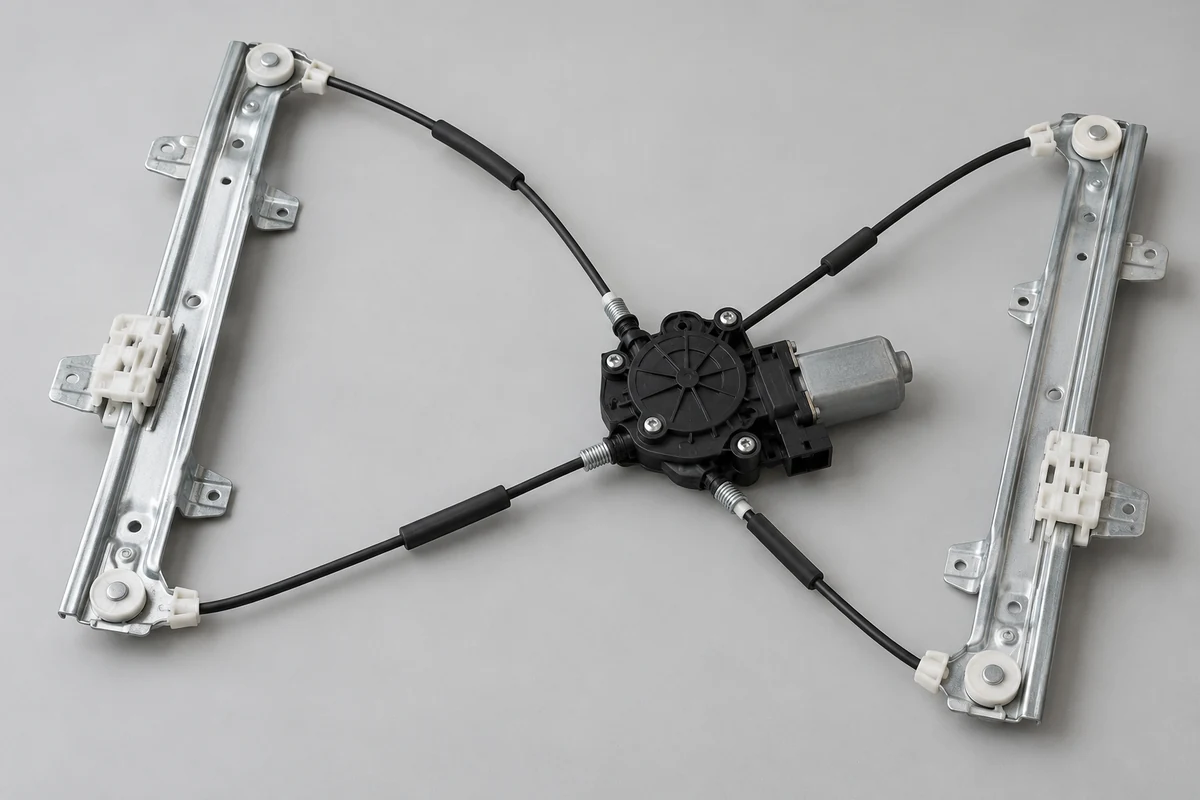
A service note saying “window motor replaced” may describe the fault or outcome rather than the exact purchased object issued from stores. If the system turns that wording into motor-only consumption, the next reorder can replenish motors even though complete regulator-and-motor assemblies were actually consumed.
Reconcile the historical issue unit before using it as demand evidence. This article does not diagnose the fault, authorize motor reuse or determine the correct replacement scope for a vehicle.
A motor can be part of the purchased assembly
Dorman's 741-430 entry describes one regulator-and-motor assembly and includes a harness. It separately marks anti-pinch motor and embedded logic fields No. Reopened on 14 October 2026, those facts describe that named unit only; they are not a statement about the requirements or safety functions of another vehicle. Dorman 741-430 supplied unit
The purchasing lesson is to retain the delivered object. A motor contained inside an assembly is not automatically a separately consumed stores motor. Nor does a job's shorthand prove that a loose motor rather than the complete assembly was issued.
Keep the authorized current requirement distinct from corrected history. Discovering that past jobs consumed assemblies does not decide that every future fault needs an assembly. The responsible technical owner still defines the upcoming work scope.
Reconstruct the issue from attributable records
For each affected historical entry, compare the service reference, pick line, issued SKU, receipt product definition and returned quantity. Ask the stores owner which object actually left stock. A symptom description alone is weaker evidence of the purchase unit than the identifiable issue record.
Distinguish a label correction from a quantity correction. If one assembly was issued but labeled motor, the record may need a changed unit identity while its count remains one. If the system deducted both an assembly and its included motor, the owner must determine whether those are two views of one issue or two real supplies.
Preserve the original entry and the correction evidence. Do not quietly rewrite the past to make the current shelf balance match. An unresolved physical count difference remains a separate question even after the product-unit label is clarified.
Keep motor-only and assembly pools separate
Maintain independent balances for approved motor-only units and complete assemblies. Do not divide or dismantle assemblies in the planning sheet to create loose-motor coverage. If an authorized repair scope calls for a complete assembly, a motor-only surplus does not satisfy it by arithmetic.
Likewise, do not automatically consume a complete assembly to cover a motor-only obligation merely because it is available. That would be a changed supply decision requiring its own scope and authority. Replenishment should use the actual approved object, not whichever line has more stock.
| Field | Record to keep |
|---|---|
| Service record | Job reference and original shorthand |
| Issued supply unit | Attributable SKU and actual complete object |
| Motor-only stock | Eligible separately purchased motors |
| Assembly stock | Eligible complete accepted assemblies |
| Correction evidence | Pick/receipt reconciliation and record owner |
| Repeat order unit | Current authorized object and purchase quantity |
Fictional example: twelve “motors” were not twelve loose motors
Assume a fictional historical report lists twelve motor issues. A review confirms nine were complete assembly A issues and three were separately stocked motor M issues. All references and quantities are invented. The corrected history is nine assemblies and three motors, not twelve of each and not twelve motors.
Suppose the current authorized queue separately requires four A assemblies and two M motors. Stores has one eligible A and five eligible M units available to that queue. The purchase gap is three A assemblies; M has no current gap and leaves three units after its two obligations are covered.
Copying the original motor-only history into a repeat order could add M stock while leaving A short. Subtracting the M surplus from the A gap would also be wrong: the supplied objects differ, and no approved conversion has been established.
If two historical records cannot be resolved, retain them in an uncertainty category. Do not proportionally distribute them between A and M merely to make a complete-looking trend chart. The current committed requirement can still be calculated from its own approved scope while historical forecasting remains qualified.
Make the correction survive the next cycle
Keep a clear issue-unit description in future purchase and receipt records. Ask the system owner to distinguish service-language tags from inventory SKUs so a symptom or repair shorthand does not overwrite the supplied object again.
The final proposal should show corrected historical quantities, the independent current requirement and actual eligible stock by object. It establishes a defensible repeat-buy basis without claiming a diagnosis, a motor-salvage route or universal assembly interchangeability.
Request the identified replenishment
See Body parts for category context. In an Autoparts sourcing request, identify the approved product and the unresolved replenishment question. The form accepts an 8–1200-character description or supported marketplace link, and up to five PNG, JPEG, WebP or GIF images, limited to 10 MiB each and 20 MiB total. Other technical files need a separately agreed, authorized exchange; the image field is not a PDF, CAD or ZIP portal.
Named manufacturer products are documentary examples, not branded supply offers, affiliation or evidence that another supplier can make or validate an alternative. Independent buying coordination and supplier negotiation do not establish fit, safety approval or guaranteed savings.
Frequently asked questions
Does a note saying motor replaced prove a motor-only issue?
No. It may describe the service outcome rather than the supplied object. Reconcile the note with the pick record, SKU and accepted receipt definition before treating it as motor-only consumption.
Can excess loose motors reduce an assembly shortage?
Not without a separate applicable decision changing the authorized supplied scope. Keep complete assemblies and separately stocked motors in different coverage pools. This worksheet does not authorize dismantling, combining parts or retaining an old regulator.
Should a corrected historical unit determine future repair scope?
No. Corrected history makes the inventory record more accurate, while the responsible technical owner defines each upcoming requirement. A past assembly issue is not a diagnosis or a rule that all future jobs need the same object.
What if some old issues remain ambiguous?
Preserve the original records and mark the affected quantities unresolved. Do not invent a split between motors and assemblies. Calculate current committed demand from its own approved scope and qualify any historical forecast that still relies on those entries.
Sources
Discuss a sourcing request related to this article.Window-Regulator Reorders: Correct the Issue Unit