
Suspension Bush Handover: Load-State Evidence
Trace the fastening load-state requirement for an exact bushing to the completed-work record, without inventing a universal tightening position.
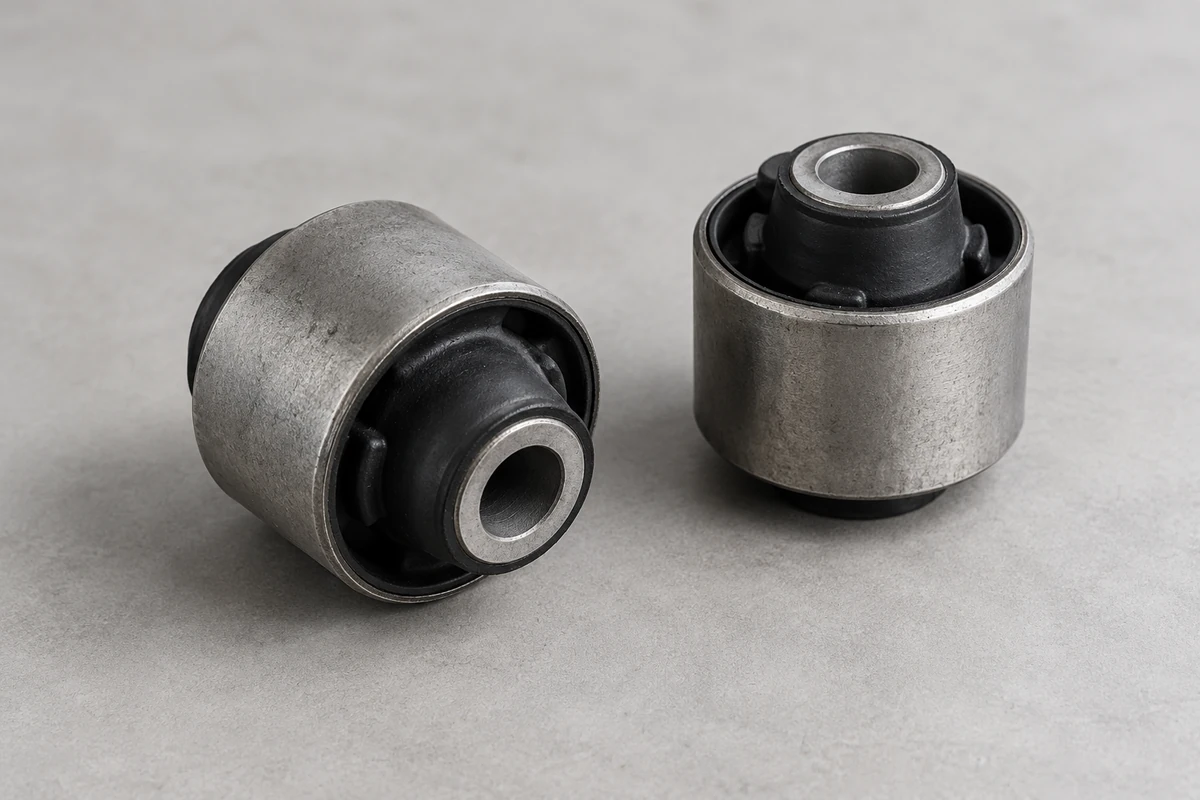
A bushing-work record that says tightened may omit the condition under which the applicable instruction required that work to be completed. In a suspension bush handover, preserve the exact load-state requirement reference and the provider's evidence for the completed job. The buyer should not fill the gap with a universal position rule.
This is a review of the relationship between the governing instruction and the work record. It does not select a bush, prescribe torque, position a vehicle, operate pressing tools or tell a receiver to repeat physical work.
The source explains why the condition matters
Delphi's suspension-bush guidance links fixing position to bushing stress and notes that some replacements need specialist tooling. Checked on 14 October 2026, it provides context for asking about the actual requirement; it is not a universal tightening instruction for all designs. Delphi suspension-bush guidance
Use the current vehicle and component instruction established by the qualified service provider. Do not replace it with a generalized internet rule or infer that a visually similar bushing uses the same completion condition.
Preserve the condition with its source
Identify the exact bushing, arm or assembly and job location covered by the record. The service provider should identify the applicable instruction and the relevant load-state condition. Retain the document reference and section rather than rewriting the technical direction into the buyer's own words as a new procedure.
Keep requirement evidence separate from execution evidence. A manual can show what should govern the work. The provider's attributable job record can state what was done and what limitations apply. Neither automatically supplies the other.
Where the record says standard procedure followed, ask which actual instruction and condition that phrase refers to. A familiar workshop method should not be substituted for a named requirement simply because the paperwork is otherwise complete.
Interpret missing evidence narrowly
If the condition is absent from the completion record, record an evidence question. Do not conclude from silence that the work was performed incorrectly. Ask the responsible provider whether an existing attributable record can clarify the condition and whether a qualified disposition is needed.
Avoid requests that would turn a documentary enquiry into an unauthorized correction. The buyer should not tell warehouse staff or another workshop to loosen, retighten, press or reposition anything to produce a new tick in the worksheet. Any proposed additional work must come from the qualified owner under its actual scope and authorization.
An after-the-event photograph has limited meaning. It may identify the assembly or vehicle state when the image was taken, but it cannot by itself establish the condition at an earlier fastening event. Preserve its time and purpose rather than treating it as a reconstruction of work history.
Load-state evidence worksheet
| Field | Record to retain | Separate review question |
|---|---|---|
| Exact bushing work | Component, location and service-job reference | Does the evidence concern the same work? |
| Governing instruction | Current source and applicable section | Who established its relevance? |
| Required condition | Traceable load-state requirement reference | Is a generic workshop habit being substituted? |
| Completed-work evidence | Provider’s attributable statement or record | What condition does it actually document? |
| Qualified review | Named owner and scoped conclusion | Does the evidence answer the requirement? |
| Exception disposition | Remaining uncertainty and responsible next action | Is clarification or separately authorized work proposed? |
The table is an editorial evidence aid. It gives no universal vehicle position, force, torque value, tightening order or bushing acceptance limit.
Fictional case: a completion tick with no condition
A fictional bushing job B has an applicable instruction reference I. The completed worksheet records fastening finished but does not identify the condition addressed by I. The provider sends a later photograph of the vehicle and says it looks normal. No actual work quality or condition is represented.
The buyer asks for the record connecting B's fastening event to I's applicable condition. It preserves the photograph as a later image, without treating it as proof of the earlier event. The record gap remains precise: the load-state evidence is not established, rather than the whole assembly being declared defective.
Suppose the provider locates an attributable job note that clarifies the condition. That note can go to the qualified reviewer with I. If the provider instead says the historical condition cannot be established, keep that uncertainty and obtain its scoped disposition. The buyer does not order a repeat tightening operation as an administrative shortcut.
Keep the handover distinct from a contents check
A supplied arm can include the required bushings while the service record still has this evidence gap. Conversely, a clear work record cannot explain a missing purchased component. Close the load-state question only at the level supported by the qualified answer. Documentary completeness does not itself prove correct fastening, bushing durability or a ready-for-use suspension.
Keep the purchasing enquiry focused
For category context, see Suspension parts. In an Autoparts sourcing request, identify the actual part and the unresolved handover question. The form supports an 8–1200-character description or a supported marketplace HTTPS link, and up to five PNG, JPEG, WebP or GIF images, limited to 10 MiB each and 20 MiB combined. PDF, CAD and ZIP files need a separately agreed, authorized exchange.
Independent aftermarket or unbranded buying coordination and supplier negotiation do not establish service-provider capability, fitment, engineering approval or a ready-for-use vehicle. Named manufacturers above are documentary examples, with no affiliation or branded-goods offer implied.
Frequently asked questions
Should every suspension bush be tightened in the same vehicle position?
This article provides no universal position rule. The qualified provider must establish the current instruction for the exact design and application. Preserve that requirement reference rather than generalizing a manufacturer’s broad guidance.
Does a missing load-state entry prove incorrect installation?
No. It shows that the available record does not establish that condition. Ask the responsible provider for attributable clarification or a qualified disposition. Do not convert a paperwork gap into a fault finding or an improvised repair instruction.
Can a later vehicle photograph prove the earlier fastening condition?
Not by itself. It records what is visible at the time of the image. Keep its timing and purpose clear and request the actual work-event evidence; appearance cannot reconstruct an undocumented fastening history.
Can the buyer ask another workshop to retighten the bushes to close the file?
The worksheet does not authorize physical correction or define a method. Any proposed additional work needs the qualified owner’s product-specific scope and the actual authorization. First preserve the original record and clarify what remains unknown.
Sources
Discuss a sourcing request related to this article.Suspension Bush Handover: Load-State Evidence