
Brake Pad RFQ: Compound Label and Disc Compatibility
Keep ceramic pad labels separate from the actual disc system, application evidence and included accessories when comparing brake pad offers.
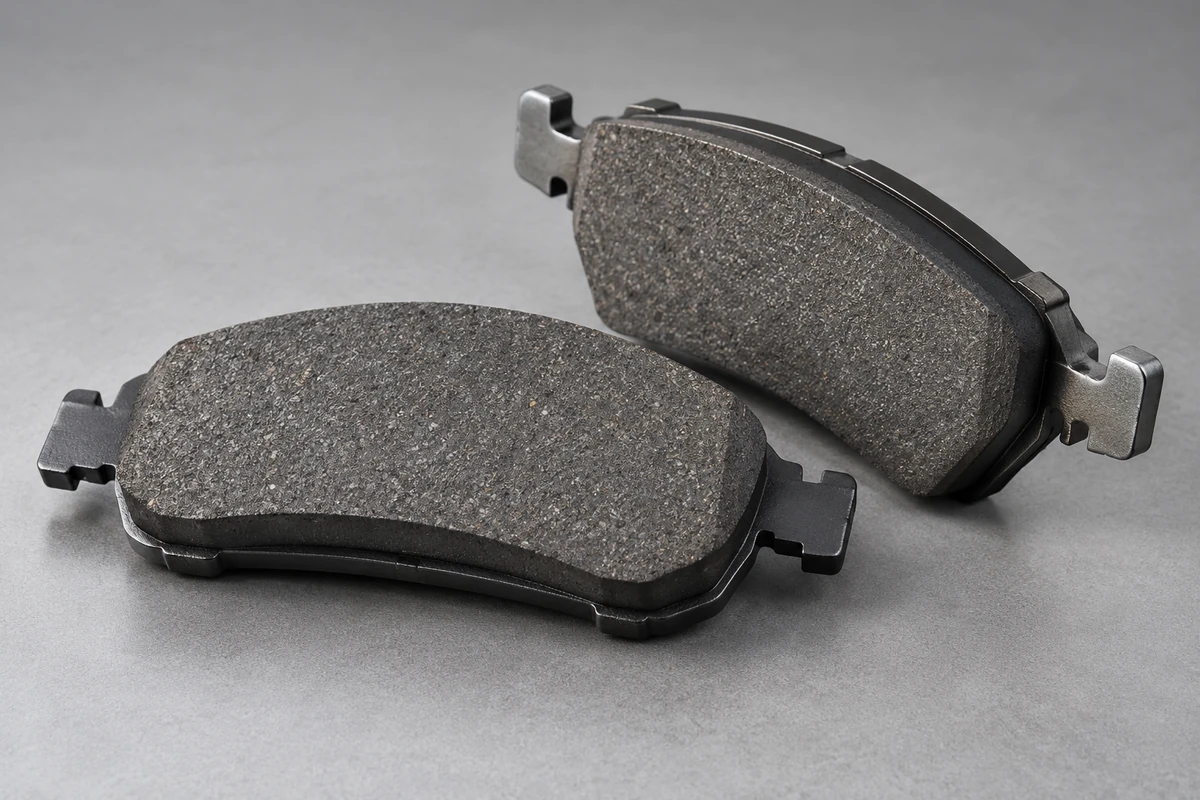
The word “ceramic” in a brake-pad description does not establish compatibility with a carbon-ceramic disc system. Begin the RFQ with the actual approved pad application and disc system, then ask what compound and accessory scope the supplier is offering. A shared word is not technical evidence.
This purchasing comparison does not recommend a compound, approve braking performance or select a replacement from appearance. The authorized application and the responsible braking-system acceptance process remain the baseline. An affordable offer must answer that baseline without relying on a misleading label.
Read the explicit exclusion beside the product name
Brembo’s American catalogue page for P85165N names its Prime Ceramic pad and explicitly excludes carbon-ceramic brake discs. It also states that accessories are included without itemizing the accessory list in the cited fields. This is a clear documentary example of a compound label and a disc-system restriction coexisting. Brembo P85165N catalogue
Do not transfer the named manufacturer’s performance or approval claims to an unbranded pad. Equally, do not generalize the example into a rule that identifies every ceramic-labelled pad’s compatible disc systems. The actual proposed pad needs its own supported application and explicit restrictions.
A negative application statement is useful evidence. Preserve it where the buyer can see it, rather than omitting it because the product title sounds promising. An exclusion should not be converted into an uncertainty merely to keep a low-priced candidate in contention.
Separate three identities
Record the approved pad/application reference, the actual disc system and the offered compound identity as distinct fields. The first identifies the requested application; the second prevents a misleading material-name inference; the third identifies what the supplier says it will supply. None replaces the other two.
For an aftermarket or unbranded proposal, request the supplier’s actual product designation and applicable technical evidence. “Ceramic like the reference” does not identify the offered formulation or establish friction equivalence. A similar outline or backing plate also does not answer the system-compatibility question.
If the disc system is unknown, resolve it through the responsible technical source before selecting a candidate. Do not guess from a photograph or ask a seller to supply whichever pad it considers close enough. The buyer should not recommend testing an unsupported combination to decide whether the quote is usable.
Expand accessories into a real contents question
Ask for the names and counts of the accessories actually included with the proposed pad set. Keep that response linked to the offered SKU and package. A generic phrase may refer to different contents across a product range, and the buyer should not invent a universal list of clips, sensors or other items.
Record which required accessories are excluded or separately offered. An accessory available from the seller is not automatically included in its pad price. Conversely, do not add unrelated items simply to make an offer seem more complete. The required scope comes from the authorized application.
A compound-and-disc worksheet
| Record | What belongs in the RFQ | Unacceptable shortcut |
|---|---|---|
| Pad application | Approved exact reference and variant | Broad vehicle name alone |
| Disc system | Established system identity | Guessing from “ceramic” wording |
| Offered compound | Actual supplier product/compound designation | Borrowed brand-performance language |
| Restrictions | Explicit supported uses and exclusions | Suppressing an inconvenient exclusion |
| Accessories | Required and offered identities/counts | Assuming a standard accessory bundle |
| Evidence and decision | Product-specific requirements and responsible owner | Treating contents or shape as braking approval |
The worksheet does not reproduce a certification case or prescribe a regulatory standard. Applicable destination obligations remain a separate, product-specific responsibility. Keep the named evidence and the actual offered goods connected.
Fictional comparison: reject the inference, not just the price
Assume a fictional buyer’s established requirement concerns a carbon-ceramic disc system. Offer A says “ceramic pads” and cites a reference whose documentation excludes that system. Offer B identifies the intended disc system in its reply but does not supply the required product-specific evidence or an accessory list. These offers are invented and neither is accepted.
A cannot be treated as matching on the basis of the shared word ceramic. The documented exclusion defeats that inference. Ask for a genuinely application-supported proposal if the supplier can provide one; do not ask it to reinterpret the exclusion or suggest a practical trial.
B’s response is more specific but still incomplete. The buyer requests the required evidence for the actual pad and the itemized accessory scope. A seller’s confident assertion does not become acceptance merely because A’s mismatch is clearer. If B’s eventual documentation concerns another product, the evidence gap remains.
The worked decision is deliberately conservative: A’s unsupported inference is rejected, and B stays conditional. There is no fictional claim that the more expensive, better-described or ceramic-labelled candidate performs better.
Discuss affordability only on an established application basis
Request actual pricing for the supported candidate and defined accessory scope. Commercial differences can be compared when the required technical and destination evidence stage has been satisfied. Do not trade away application restrictions, required performance or accepted scope to reach a target unit price.
If a supplier proposes a drawing-based pad alternative, the drawing alone is not a friction or system-validation result. Identify the necessary technical responsibility before treating that proposal as a viable sourcing route. A clear RFQ prevents a misleading match; it cannot turn missing braking evidence into an acceptable risk allowance.
Prepare the sourcing request
For the broader product group, see Brake parts. If the application is not established, start with the OE and application identification guide before asking for a substitute.
Use the Autoparts sourcing request to describe the required item and the particular question left open above. The form accepts a description of 8–1200 characters and up to five PNG, JPEG, WebP or GIF images, limited to 10 MiB each and 20 MiB total. It does not accept CAD, PDF or ZIP attachments. Authorized drawing images can start a discussion; arrange other technical files separately through an actually agreed, authorized exchange.
Keep requests for independent aftermarket or unbranded alternatives tied to the authorized application or drawing. Supplier negotiation and a drawing-based proposal do not establish engineering acceptance, actual manufacturing capability or guaranteed savings. Named catalogue products in this article are documentary examples, not branded-goods offers or approvals of an unknown alternative.
Frequently asked questions
Are ceramic brake pads automatically suitable for carbon-ceramic discs?
No. A compound label does not establish disc-system compatibility. Check the actual pad’s application evidence and explicit restrictions against the established disc system. Preserve exclusions rather than inferring compatibility from shared wording.
Can matching pad shape establish friction equivalence?
No. Geometry does not establish the offered compound’s performance or suitability for the braking system. Keep actual product identity and the required technical evidence separate from visual or dimensional comparisons, with responsible acceptance before selection.
What does with accessories mean in a brake-pad quote?
It needs an itemized answer for the exact proposed package. Ask for names and counts of included items and distinguish required exclusions or separately priced options. Do not invent a standard accessory list from a general catalogue phrase.
What if a supplier states compatibility but provides no evidence?
Keep the offer conditional on the product-specific evidence required by the responsible reviewer. A clear statement helps identify the claim being made, but it does not substantiate it. Do not use an unsupported combination or a trial as a substitute for establishing the application basis.
Sources
Discuss a sourcing request related to this article.Brake Pad RFQ: Compound Label and Disc Compatibility