
Used fuel tanks: do not price a dry-looking shell as unused cargo
A used fuel tank’s freight assessment must include prior contents and attributable condition evidence; a dry-looking shell is not an unused-cargo record.
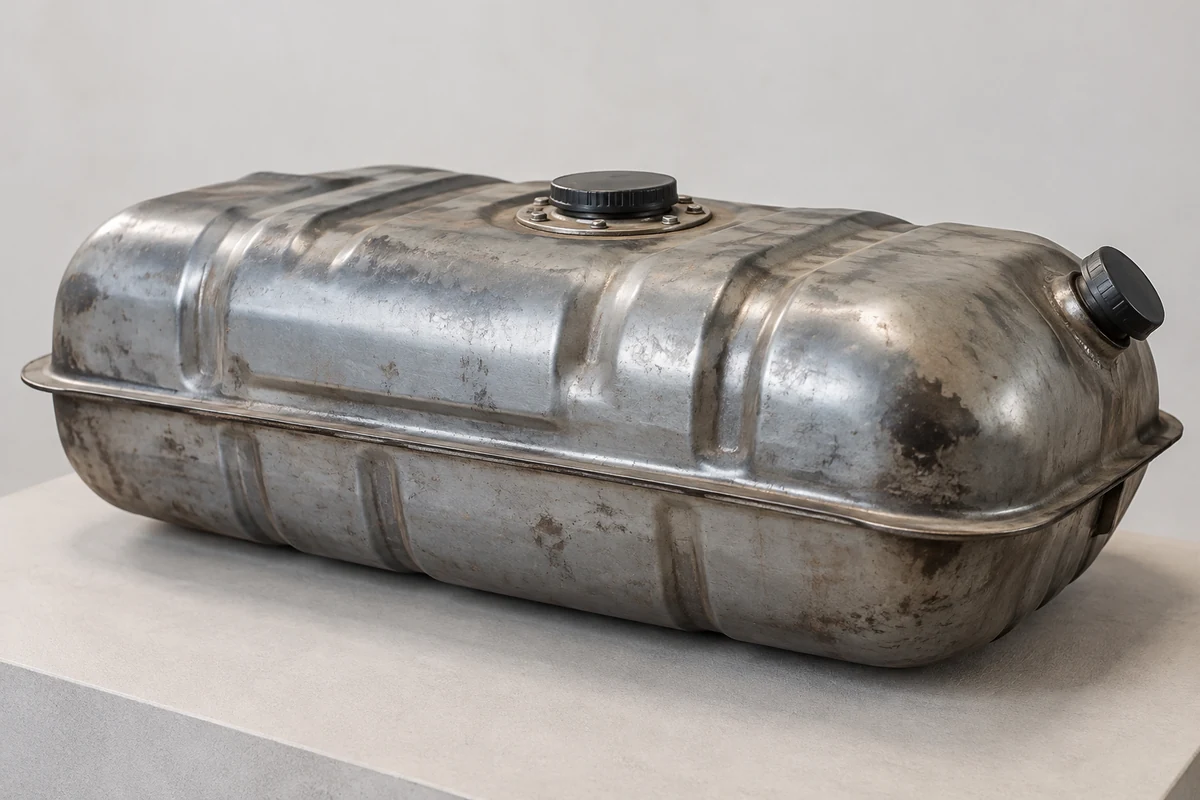
A seller's statement that a used fuel tank is empty leaves an important freight question unanswered: what prior contents and condition did the specialist provider assess? Describe the tank's actual history before treating a general auto-parts quote as usable. The absence of visible liquid does not establish the shipment's transport status.
This is an evidence and quotation review. It gives no instructions for opening, draining, purging, smelling, testing or cleaning a tank. Any necessary technical assessment or intervention belongs with qualified specialists under the applicable requirements.
Preserve the used-item history
Ask the seller to identify the tank, its documented previous use, known prior contents and current condition. Distinguish a genuinely unused item from one removed from service or one whose history is unavailable. If the seller cannot establish a fact, record it as unknown rather than converting it into “new empty shell.”
Request records that already exist, with issuer and date. A general photograph may help identify the item but cannot answer all questions about residue or its internal condition. Keep a seller's statement attributable, including what it does and does not claim.
UPS's common-hazardous-items guidance flags auto and engine parts, including fuel tanks, that may contain fuel or residue. That is a reason for specialist review; the page does not classify this buyer's tank or provide a route-specific acceptance. UPS common hazardous-item screening
Ask the specialist to define the missing evidence
Give the qualified transport provider the actual history, proposed packing description and movement details. Ask whether the supplied evidence is sufficient for its assessment and, if not, which qualified party must resolve the gap. Let the provider determine the relevant classification and acceptance requirements.
Do not construct a declaration from a seller's adjective. “Dry,” “clean” and “empty” can describe different observations without establishing what the provider needs. Ask the seller to clarify the basis of its own wording, then pass the response through unchanged for assessment.
If an intervention is proposed, obtain its professionally defined scope and commercial terms before making a purchasing decision. Do not tell ordinary warehouse staff to perform a procedure merely to satisfy an assumed courier requirement. A review request should not become an improvised handling instruction.
Keep route availability separate from its price
A provider may issue a preliminary budget figure while acceptance remains open. Label that figure as conditional and identify exactly what is outstanding. Another provider may decline the item or be unable to assess it. Neither outcome can be converted into an available cheap route by adding an arbitrary surcharge.
Ask which actual condition and history support the final quote. If the tank is substituted with a different used unit, have the provider review the replacement record. Matching external dimensions do not mean the history used in the assessment is unchanged.
| Tank enquiry field | Buyer record |
|---|---|
| Tank identity | Exact unit or attributable lot reference |
| Prior contents | Documented history and its source |
| Condition evidence | Existing records, issuer and date |
| Unknown history | Gaps retained explicitly |
| Specialist assessment | Provider answer tied to the actual unit and route |
| Quote status | Conditional, assessed offer, or unavailable proposal |
The worksheet's status field prevents a numerical estimate being mistaken for a completed acceptance review. It also avoids concluding that the item is universally prohibited simply because one provider cannot carry it.
Fictional comparison: a dry-looking shell
In a fictional purchase, a used tank is photographed on a shelf and described as empty. A parcel estimate lists only “auto parts.” The seller has not supplied prior-use records, and the provider has not assessed that uncertainty. No real tank condition or classification is represented.
The buyer asks the seller to identify the history and sends the available facts, including the missing ones, to the specialist. It does not ask someone to smell the tank or open it to demonstrate that it is harmless. Until a provider supplies an attributable conclusion and terms, the transport budget remains unresolved.
If an unused replacement is proposed instead, compare it as a different purchase after its own identity and suitability review. Do not relabel the used item as unused to retain the old estimate. The useful purchasing outcome is a truthful cargo record connected to an assessed offer, or a clear decision that the available evidence is insufficient to proceed.
The primary guidance cited here was checked on 14 October 2026. Recheck the applicable current rules and provider terms before committing to the actual shipment.
Keep the buying enquiry within scope
For product context, see Engine parts. The Autoparts sourcing request can start an independent aftermarket or unbranded buying enquiry with a short description or supported product link. It accepts up to five PNG, JPEG, WebP or GIF images, at most 10 MiB each and 20 MiB total; descriptions are 8–1200 characters. Arrange other documents through a separately agreed, authorized exchange. The form is not a PDF, CAD or ZIP portal.
Supplier information and negotiation do not establish product suitability, specialist transport acceptance or customs approval. Keep those decisions with the responsible qualified parties. No freight service, branded-product offer or guaranteed outcome is implied here.
Frequently asked questions
Does empty mean a used fuel tank is ordinary cargo?
No transport conclusion follows from that word alone. Give the qualified provider the actual prior contents and condition evidence, including unknowns, and request an assessment for the proposed route.
Can a photograph prove that a tank has no fuel residue?
A photograph can support identification and visible-condition records, but it does not settle the full residue or transport-status question. Ask the specialist what evidence is required; do not improvise a physical test.
Should I arrange cleaning before asking for a quote?
First obtain qualified advice on the actual item and any proposed intervention. This article does not prescribe cleaning or other handling. Ask for an assessed scope and costs rather than instructing warehouse staff yourself.
What if the seller replaces the tank with another used unit?
Update its identity and history record and reopen the relevant provider assessment. An externally similar unit does not automatically share the earlier unit’s evidence or accepted freight basis.
Sources
Discuss a sourcing request related to this article.Used fuel tanks: do not price a dry-looking shell as unused cargo