
Encoder Bearing Handover: Sensor-Side Evidence
Preserve the applicable encoder-side instruction and attributable assembly evidence for the actual bearing without inferring installed orientation from photos.
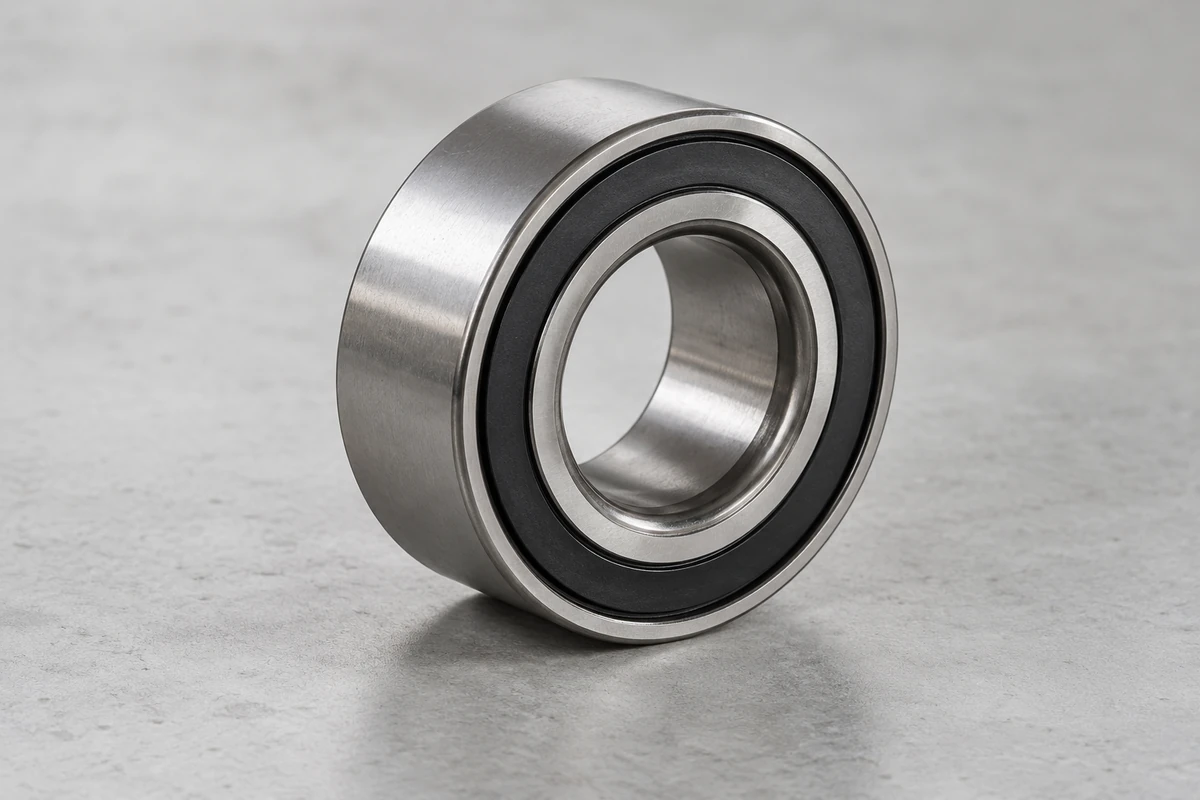
A bearing package reference can identify the purchased item without establishing the orientation of an installed encoder-bearing assembly. The handover should preserve the actual sensor-side instruction and the responsible provider's completion evidence. Do not fill a missing orientation record by interpreting a convenient exterior photograph.
This is a source-and-evidence question, not a direction-setting guide. It provides no identification test, magnetic-card technique, pressing method or installation sequence. The qualified provider must use current instructions for the actual bearing and vehicle.
Read the NSK page with its contradiction intact
NSK Europe's explicit encoder subsection at 4:40 identifies an encoder-side relationship to the sensor. Its introduction, however, describes a bearing without an encoder, contradicting the heading and later subsection. Rechecked on 14 October 2026, only the explicit encoder passage supports this narrow observation. NSK encoder-bearing subsection
The page also refers readers to vehicle-specific requirements. Do not present the entire page as an internally consistent model instruction or use its illustrated example to approve another bearing's orientation. Ask the actual provider for the applicable source.
Retain the relationship as an instruction reference
Identify the bearing, vehicle configuration and service-job location from the established application record. Ask the provider which current instruction defines the relevant encoder-side relationship for that assembly. Preserve the reference and section rather than writing a new fitting direction into the purchasing sheet.
Separate that requirement from the provider's statement about completed work. The source can define what governs; it does not prove the state of an individual assembled unit. A signed completion record can be attributable while still needing clarification about the exact bearing or job it covers.
If the bearing identity changed during supply, reconcile the instruction and record with the actual accepted replacement. A similar exterior or shared kit description should not transfer an earlier applicability answer to a different item.
Do not make the evidence request a physical experiment
Ask first for existing attributable records. An outer-package image may help connect the supplied item to its reference. An assembly record may describe the work performed. Each has a different scope, and neither should be renamed as an orientation test.
A buyer should not ask ordinary receiving staff to open protection, identify an encoder face with improvised tools or dismantle an assembly to improve a photograph. If further assessment is required, it needs the qualified provider's actual scope and authorization, not an added step in a purchasing checklist.
When a photograph is supplied, retain its date, object and stated purpose. A stock image illustrates a product but does not document the installed unit. An exterior installed view may not reveal the relevant relationship at all. State that limit rather than inferring a concealed side from color or shape.
Sensor-side evidence worksheet
| Field | Record to obtain | Limit to preserve |
|---|---|---|
| Bearing identity | Actual accepted reference and job-unit link | Package identity alone does not establish orientation |
| Vehicle instruction | Current applicable source and section | Generic illustrated examples may not govern |
| Encoder-side requirement | Provider-confirmed instruction reference | Buyer does not create a fitting direction |
| Assembly evidence | Attributable completed-work record | Reported completion is not an independent physical test |
| Review owner | Qualified assessor and scoped conclusion | Administrative receipt is not technical acceptance |
| Unresolved evidence | Missing identity, scope or orientation statement | No photo-based guess or improvised inspection |
This editorial record keeps the source relationship visible without teaching a physical orientation procedure.
Fictional case: a correct box and an unrelated assembly photo
A fictional order supplies bearing B for an established job. The packet contains B's box reference and a provider photograph showing a similar bearing before assembly. The completion note says bearing fitted but does not map the applicable sensor-side requirement to the actual job. No real installation or result is represented.
The buyer retains the box reference as supply identity and the photograph as the provider's stated reference image. It asks for the current applicable instruction and the completion evidence for the actual assembly. It does not infer that the visible side in the stock image must be the installed side in the vehicle.
Suppose the provider returns an attributable job note that addresses the requirement but names a different bearing revision. That is a specific applicability question for the qualified reviewer. Correct-looking wording cannot close the mismatch. If the identity is reconciled, the reviewer can state what the record establishes and which conclusions remain outside it.
Hand over an honest evidence limit
The final packet should identify the governing instruction, actual unit and responsible conclusion, while preserving any unresolved orientation evidence. Packaging protection and assembly orientation answer different questions; neither should be used to fill the other's gap. The record does not certify encoder function or approve the vehicle for operation.
Keep the purchasing enquiry focused
For category context, see Suspension parts. In an Autoparts sourcing request, identify the actual part and the unresolved handover question. The form supports an 8–1200-character description or a supported marketplace HTTPS link, and up to five PNG, JPEG, WebP or GIF images, limited to 10 MiB each and 20 MiB combined. PDF, CAD and ZIP files need a separately agreed, authorized exchange.
Independent aftermarket or unbranded buying coordination and supplier negotiation do not establish service-provider capability, fitment, engineering approval or a ready-for-use vehicle. Named manufacturers above are documentary examples, with no affiliation or branded-goods offer implied.
Frequently asked questions
Can an exterior photo prove the installed encoder side?
Not by itself. It may not show the relevant concealed relationship and may not even depict the actual assembled unit. Retain the photo’s identity and purpose, then request applicable instructions and attributable completion evidence from the responsible provider.
Why is the NSK page qualified rather than cited as a complete instruction?
Its introduction describes a non-encoder bearing while its heading and later subsection concern an encoder. This article relies only on the explicit encoder subsection for a narrow observation and requires current exact-application evidence for an actual job.
Can an intact bearing package close the orientation question?
It can support a supplied-state or identity record within its visible scope. It cannot establish how a bearing was oriented after assembly. Keep protection, identity and completed-work evidence separate.
Should the buyer request a magnetic-card test or disassembly photo?
This handover does not authorize or prescribe either. Request existing attributable records first. Any further physical assessment needs a qualified provider’s product-specific scope and the appropriate authorization, rather than a purchasing-led experiment.
Sources
Discuss a sourcing request related to this article.Encoder Bearing Handover: Sensor-Side Evidence