
Plan the return pack for an agreed caliper core
An agreed core return needs its own package provider, declaration link and accepted route. The replacement caliper’s carton does not settle those responsibilities.
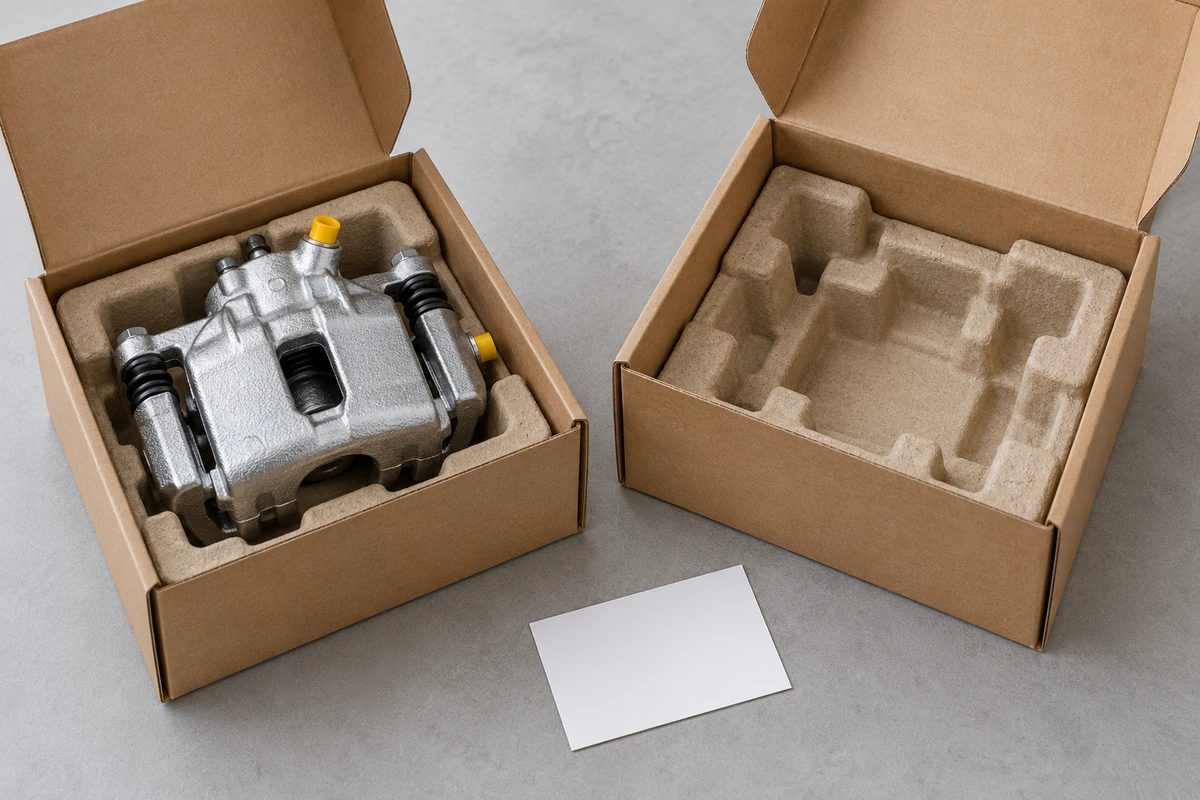
When a purchased remanufactured caliper includes an agreed core-return obligation, settle the return-package arrangement while the outbound packing proposal is still open. A carton that delivers the replacement may or may not be part of the agreed return route. Its arrival alone does not identify who supplies, approves or prepares the package for the used core.
This review assumes the commercial core obligation already exists. It concerns the package and its associated return record, not whether an exchange offer is cheaper or how a caliper should be removed, dismantled or prepared for transport.
Start with the actual program and its responsible account
ZF’s Core Return Guidelines, revision 01_2026 are explicitly a European reverse-logistics example. They describe a process for authorized direct customers using CorExpedia, conditional core eligibility and transport arrangements, and an authorized signed declaration linked to the packages. The current URL and relevant sections were checked on 14 October 2026.
Those terms apply to the stated ZF program. They do not establish a return service, portal access, free transport or credit for another supplier’s caliper. For the actual order, identify the party that owns the return account, the governing offer and the provider who can answer packing questions.
A workshop or buyer named as a pickup location may have a different role from the authorized program customer. Record the roles as the actual provider defines them. Do not assume that possession of a replacement invoice permits someone to create declarations or authorize a collection.
Give the return package an explicit provider
Ask whether the proposal includes a dedicated return package, confirmed reuse of a specified supplied carton, packaging furnished by a qualified service provider, or a still-unresolved arrangement. The answer should name what is supplied and who confirms its suitability for this core and route.
“Use the old box” leaves several facts unstated: which box, what supplied condition it will be in, whether any return packaging is included, and who has authorized that use. Purchasing should request those answers without selecting cushioning, containment materials or preparation methods itself.
A compact outbound carton may be acceptable for the purchased replacement yet unavailable or unsupported for the return arrangement. If a smaller outbound-pack proposal removes something that the agreed return plan depends on, ask the provider to reconcile the two plans before approving that change. Do not presume the replacement and core are identical packing objects.
Keep the declaration attached to the actual package record
The return documentation should identify the actual eligible core and package grouping under the program’s rules. If the proposed grouping changes, ask whether the corresponding declaration must change as well. A declaration prepared for one package configuration should not silently stand for another.
Separate the issuer, signer and coordinator roles where the program does. Request the actual required document and approval route from the responsible party; do not invent a buyer-signed substitute or copy a form from a different return program. The source example explains why package-linked documentation matters, not a universal form to use.
For the purchasing record, name the program, eligible-core reference, return-pack provider, declaration-to-package link, agreed recipient and unresolved responsibilities. Record what has been confirmed separately from what is expected later. This is an original coordination aid and does not certify transport compliance.
Fictional example: an outbound packing decision leaves no return arrangement
Imagine a fictional buyer whose caliper order includes an agreed core return. Before dispatch, a compact-carton proposal omits the earlier proposed return packaging. The buyer assumes any available box will serve and approves the change without asking the actual program provider. At the return stage, that provider requests its specified packaging arrangement and corresponding package-linked records. No real shipment or manufacturer dispute is described.
The problem is not solved by showing that the replacement arrived undamaged. That observation concerns the outbound movement. The buyer asks the return provider to identify an available authorized arrangement, its responsibilities and any changed commercial terms. The return remains unresolved until those answers are connected to the actual core and destination.
Suppose a provider confirms the new package arrangement but the declaration still lists an earlier grouping. The package question may be answered while the documentation remains open. Conversely, a valid declaration cannot demonstrate that the agreed package has been supplied. Both parts need their own attributable status.
Leave physical preparation and credit to their proper owners
Used calipers may present contamination or residual-material questions. Have the qualified return provider address the actual core’s condition and applicable route. This article supplies no draining, cleaning, dismantling or containment procedure and makes no waste-classification or regulatory-compliance determination.
Keep collection acceptance, arrival, core assessment and any account credit as separate events. An agreed package does not guarantee that the core qualifies or that a credit will be issued. The buyer can close the packing arrangement when its scope, provider and document link are established, while preserving any remaining program conditions in the return record.
Bring the actual proposal into the sourcing request
See Brake parts for category context and the supplier-check guide for the earlier supplier review. The manufacturer example above does not establish affiliation, a branded-goods offer or another supplier’s capability. Independent aftermarket or unbranded proposals need their own attributable evidence.
An Autoparts sourcing request can identify the approved product and the specific packing change still awaiting an answer. The form accepts an 8–1200-character description and up to five PNG, JPEG, WebP or GIF images, at most 10 MiB each and 20 MiB total. It does not accept PDF, CAD or ZIP files; arrange other technical files through a separately agreed, authorized exchange. Buying coordination and supplier negotiation do not establish an owned factory or laboratory, specialist packing services or engineering approval.
Frequently asked questions
Can the replacement caliper carton automatically be used for the core return?
Only the actual program provider can confirm the offered return arrangement for that core and route. Ask which supplied package, if any, is intended for reuse and who approves it. A carton’s successful outbound journey does not establish its return role or demonstrate that the necessary return packaging is included.
Do ZF’s European core-return rules apply to every remanufactured caliper?
No. The January 2026 document describes the specified ZF program and authorized customer process. Another offer needs its own terms, eligibility, packaging responsibility and documentation route. Do not infer CorExpedia access, transport funding or a credit entitlement from the fact that a caliper is remanufactured.
What if the package grouping changes after a return declaration is prepared?
Ask the responsible program party to reconcile the declaration with the actual proposed grouping. Keep the existing document identified as covering its original configuration until an attributable answer resolves the change. Purchasing should not silently edit identifiers, sign a substitute declaration or assume the carrier will accept a mismatch.
Does a confirmed return package guarantee core credit?
No. Package provision, transport acceptance, core eligibility and account settlement are separate questions under the actual agreement. Record each event and its evidence. A completed collection or a signed package record should not be described as final technical acceptance or a promised refund before the responsible program confirms it.
Sources
Discuss a sourcing request related to this article.Plan the return pack for an agreed caliper core