
Used suspension parts to Australia: budget unresolved contamination outcomes
For used suspension parts entering Australia, resolve condition evidence and current parts-specific biosecurity assessment before accepting uncertain arrival costs.
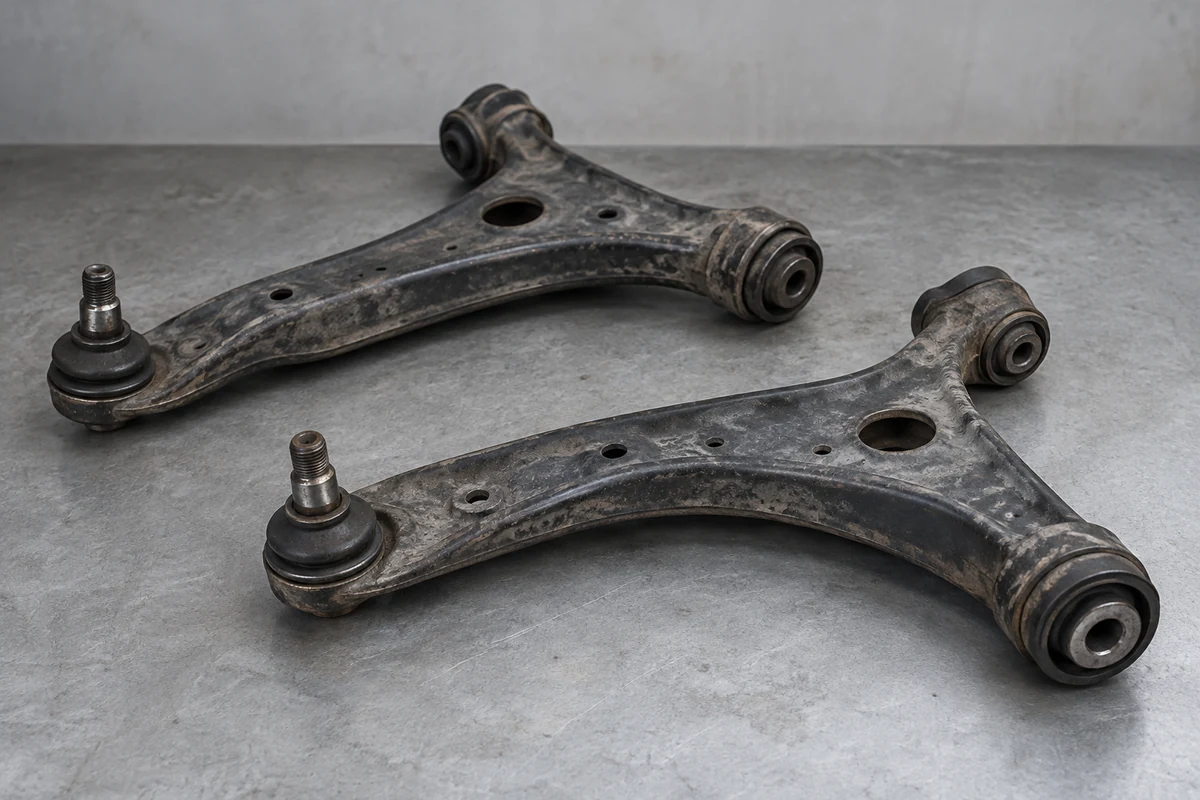
Used suspension parts offered for Australia need a cost review that preserves uncertainty about contamination. Before dispatch, ask whether the actual parts and their condition evidence support the proposed import pathway, and who bears any assessed additional expense. A clean-looking photograph or a seller's cleaning statement is not a clearance guarantee.
This article focuses on used parts and conditional contamination costs. It does not apply complete-vehicle inspection rules automatically to loose suspension components, select a seasonal treatment or give a cleaning procedure.
Describe the actual used parts
Identify the parts and their previous-use history from the supplier's records. Keep references and quantities connected to the consignment, and disclose missing history. A mixed lot should not inherit one item's condition statement when the supplier cannot show that it covers the rest.
Ask for attributable information about current condition and any existing professional preparation record. Record the issuer, date and goods covered. Images can support the description, but they cannot establish that all inaccessible surfaces are free of risk material.
Do not make surface colour the decision. A repainted part and an unpainted part may each have unanswered history or condition questions. The importer and its adviser need the actual evidence, including limitations, rather than a purchasing team's appearance-based assurance.
Obtain the current parts-specific assessment
Australia's DAFF guidance places responsibility on importers for goods, including relevant parts, to arrive free from biosecurity risks. Its opening guidance identifies possible inspection and contamination outcomes at importer or owner expense and directs readers to BICON for detailed conditions. This is an Australia-specific framework, not a clearance decision for a suspension consignment. DAFF vehicle, machinery and parts guidance
Give the responsible broker or adviser the exact used-parts description, history, evidence and movement proposal. Ask which current BICON conditions apply and what remains unresolved. Retain the dated assessment and any required official response with the goods record.
Separate that answer from the carrier's willingness to move the boxes. Freight acceptance does not decide biosecurity release. Equally, a whole-vehicle paragraph should not be copied into a loose-parts budget without a parts-specific basis.
Separate confirmed services from contingent outcomes
Request actual quotes for services the responsible assessment identifies. Ask the provider to describe what is included, what event triggers an extra charge and who is responsible under the parties' agreement. Do not budget a treatment as certain merely because it is one possible outcome.
Keep treatment, export and destruction as conditional branches when the actual assessment leaves them possible. Ask the adviser what decisions or official directions would govern each branch. This purchasing worksheet does not select any intervention or authorize disposal.
An unknown expense should remain unknown. If the buyer needs a spending limit before deciding, request an attributable provider estimate with its assumptions and limits. Inventing a flat “biosecurity allowance” may hide the very risk that makes the order unsuitable for the buyer's budget.
| Used-parts field | Evidence or decision |
|---|---|
| Part history | Used identities, quantities and attributable history |
| Condition evidence | Issuer, date, goods covered and limitations |
| BICON assessment | Current parts-specific basis and responsible adviser |
| Inspection pathway | Confirmed requirements or unresolved official conditions |
| Contingent expense owner | Agreement for each assessed possible outcome |
| Dispatch decision | Buyer decision after material gaps are resolved |
Fictional comparison: the cleaning statement covers one item
A fictional supplier offers a mixed lot of used suspension parts. A cleaning record identifies one component, while the quotation describes the entire lot as ready for Australia. The broker has not assessed the other items. No contamination finding or import outcome is implied.
The buyer asks the supplier to reconcile the record with the actual contents and sends the complete information for parts-specific review. It does not treat the single record as proof for the whole lot or direct the warehouse to improvise cleaning.
If a relevant question remains unanswered, the buyer can hold the dispatch decision and request the missing evidence. If an assessed pathway and costs are returned, compare that documented proposal with any separately assessed alternative. A lower product price alone does not resolve the possible arrival expense.
Preserve the assessed condition through the decision
Before approving dispatch, confirm that the final parts list and evidence are the ones reviewed. Reopen the assessment when goods, known condition or route facts materially change. No fixed clearance time or standard contamination charge is supplied here; the goal is an informed decision about the actual used-parts consignment.
The primary guidance cited here was checked on 14 October 2026. Recheck the applicable current rules and provider terms before committing to the actual shipment.
Keep the buying enquiry within scope
For product context, see Suspension parts. The Autoparts sourcing request can start an independent aftermarket or unbranded buying enquiry with a short description or supported product link. It accepts up to five PNG, JPEG, WebP or GIF images, at most 10 MiB each and 20 MiB total; descriptions are 8–1200 characters. Arrange other documents through a separately agreed, authorized exchange. The form is not a PDF, CAD or ZIP portal.
Supplier information and negotiation do not establish product suitability, specialist transport acceptance or customs approval. Keep those decisions with the responsible qualified parties. No freight service, branded-product offer or guaranteed outcome is implied here.
Frequently asked questions
Does a cleaning certificate guarantee Australian clearance of used suspension parts?
No guarantee is established here. Confirm which goods the record covers and obtain the current parts-specific assessment. Keep any limitations and official conditions visible.
Are loose suspension parts subject to the same inspection rule as a complete used vehicle?
Do not transfer a complete-vehicle rule automatically. Give the broker the exact loose-parts description and ask for the applicable current BICON conditions and pathway.
Should I include treatment, export and destruction in one fixed fee?
Those may be conditional outcomes rather than a single purchased service. Request the assessed scope, triggers and cost responsibility for each relevant branch without inventing amounts.
What if condition evidence covers only part of the lot?
Identify the uncovered items and request attributable information for them. Have the adviser review the complete consignment before relying on a statement about the whole lot.
Sources
Discuss a sourcing request related to this article.Used suspension parts to Australia: budget unresolved contamination outcomes