
Resolve Starter Housing Clocking Differences at Receipt
Compare starter housing clocking, connector and drain locations from a shared viewpoint, resolving revision conflicts without re-clocking or energizing the unit.
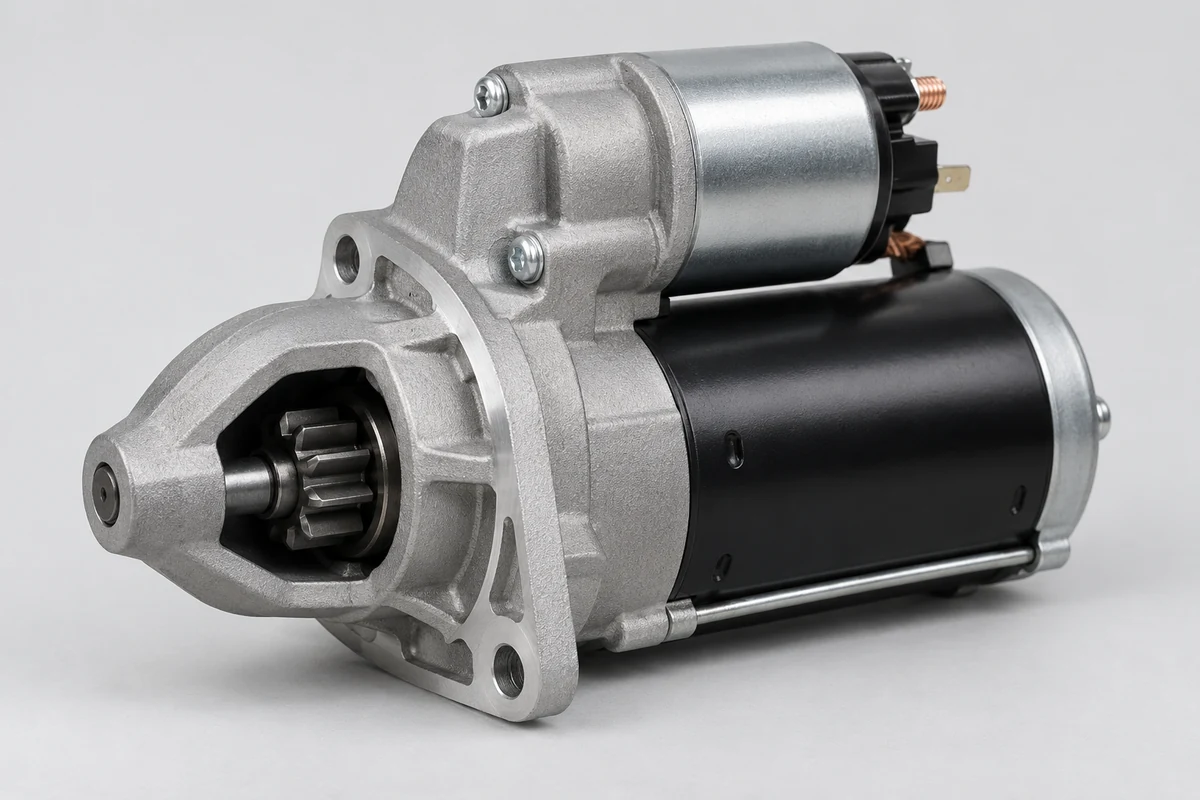
A starter’s front housing, connector and drain locations can appear different when two photographs are taken from opposite ends. Establish a shared viewpoint before declaring a clocking discrepancy. If the difference remains against the approved reference, preserve it as a supplied-configuration question rather than rotating the housing to make the unit match.
This receiving review concerns an already ordered, unused starter. It does not explain how to re-clock, energize or install one. The buyer needs to know whether the apparent change is a viewing error, an authorized revision or an unresolved departure in the actual delivery.
Make orientation part of the evidence
Identify the view used by the approved drawing or reference and label the received image accordingly. A direction such as left or upper has little meaning when the observer’s end and reference feature are unspecified. Keep the same fixed features visible where the safe existing view allows it.
DENSO’s starter replacement guidance calls out connector locations, front-housing clocking, adjusting-hole locations and drain-hole position for comparison. These are distinct layout subjects, not a universal clocking angle or permission to modify an unknown starter. DENSO starter comparison guidance
Do not infer the intended drain arrangement from gravity in a warehouse photograph. The unit’s resting orientation at receipt does not define its installed orientation. Use the approved product reference to identify which visible feature the comparison concerns, without inserting a probe into an opening.
Distinguish a view mismatch from a configuration mismatch
First ask whether the compared images depict the same end and orientation. A mirrored or oppositely viewed image may explain an apparent difference without explaining every feature. If the viewpoint cannot be reconciled, record the comparison as inconclusive instead of assigning a precise angle.
Once the view is established, describe each apparent change separately. The front housing may appear rotated relative to a fixed body feature, while a terminal appears in a different position and a documented drain location cannot be identified. These are separate observations even if a single revision could eventually explain them.
Avoid using clock-face language without defining the view. “Terminal at two o’clock” is ambiguous when another reader is looking from the other end. An annotated copy with the referenced features is more useful than an unsupported angular measurement. Preserve the original image and do not alter the part to create the comparison.
A seller’s re-clocking suggestion is not a receiving answer
If the seller says to loosen and rotate the housing, keep that as a proposed modification, not documentary clarification. It does not establish that the supplied configuration was authorized, whether other relevant features would agree, or who takes responsibility for the resulting unit.
Do not move the pinion, apply power, loosen the housing or try the starter in the vehicle to settle the dispute. The next step is an attributable configuration response from the supplier and appropriate technical owner. A service procedure elsewhere on a manufacturer’s page does not turn those actions into warehouse receiving checks.
A correct label and a familiar outer shape are also insufficient. The label-to-configuration relationship is precisely what needs to be reconciled when a supplied reference appears to conflict with visible layout. Do not relabel the unit from appearance alone.
A clocking-and-feature worksheet
This original editorial worksheet keeps orientation ambiguity separate from the actual product decision.
| Record | Detail to preserve | What it leaves open |
|---|---|---|
| Ordered starter | Approved reference and revision | Whether the supplied identity matches the configuration |
| Comparison viewpoint | Viewed end, fixed feature and image orientation | Whether apparent reversal explains the concern |
| Front housing | Relative orientation in the agreed view | A controlled configuration decision, not a guessed angle |
| Connector location | Each identified location against the reference | Electrical identity or compatibility without evidence |
| Drain feature | Product-documented location and visibility | Unknown or concealed arrangements |
| Revision response | Actual changed reference, authorization and reviewer | Whether a proposed revision can satisfy the order |
Mark features that are not visible as not assessed. Do not write “drain absent” when the relevant area is hidden. If a supplier’s response uses a different view, reconcile that viewpoint before interpreting it as confirmation.
Fictional counterexample: “rotate it” leaves the order unresolved
A fictional starter T-6 carries the ordered reference. After the front and side views have been aligned with the approved record, its terminal and documented drain locations still appear different. The seller says the housing can be rotated to suit. All references and events are invented.
The buyer holds T-6 in its supplied configuration and asks whether this is an identified revision, whether that revision was authorized for the order, and what evidence addresses both locations. No housing fasteners are loosened. The fact that modification is suggested does not answer what was actually delivered.
Suppose a later supplier photo is taken from the opposite end. It may explain why one image looked reversed, but it cannot automatically close the already aligned comparison. The buyer requests consistent feature references rather than cycling through reassuring photographs.
If an authorized technical reviewer eventually confirms that the apparent conflict was only a view issue, record the basis and covered features. If the difference reflects a changed configuration, preserve the revision decision or agreed replacement proposal. Neither outcome should be extrapolated into a starter performance certificate.
Keep the release narrower than the explanation
A useful final record identifies the received starter, the views compared, the applicable revision and the exact questions resolved. A response about front-housing orientation does not necessarily answer an unaddressed drain or connector location. Any replacement needs its own supplied-state review; its arrival should not overwrite T-6’s original evidence or automatically close remaining acceptance requirements.
Keep the buying request tied to the actual part
For category context, see Engine parts; the supplier-check guide covers the earlier supplier review. Independent aftermarket or unbranded sourcing and authorized drawing-based proposals require their own product evidence. The manufacturer cited here is a documentary example, not an affiliation, branded-goods offer or endorsement of another supplier.
Start an Autoparts sourcing request with the exact received reference and the unresolved question. The form accepts an 8–1200-character description and up to five PNG, JPEG, WebP or GIF images, at most 10 MiB each and 20 MiB total. PDF, CAD and ZIP uploads are not supported. Arrange other technical files through a separately agreed, authorized exchange. Buying coordination and supplier negotiation do not establish an owned laboratory, an inspection service, engineering approval or a guaranteed remedy.
Frequently asked questions
Why establish a viewpoint before comparing starter clocking?
Opposite-end or mirrored views can make the same arrangement look different. Record the viewed end and fixed reference features before classifying a change. An unresolved viewpoint is an evidence limitation, not proof of a wrong starter.
Can I rotate the front housing if the supplier says it is adjustable?
Do not re-clock the starter as a receiving remedy. Ask for the actual supplied revision and an authorized configuration decision. A modification suggestion does not establish that the delivered unit matches the order or that all other interfaces remain appropriate.
Does a hidden drain feature count as missing?
No. Mark it as not visible or not assessed and request the product-specific reference needed to identify it. Do not probe the opening or infer its intended position from how the starter happens to rest in the carton.
What should a revision explanation include?
It should identify the actual revision, explain the disputed housing, connector and drain features, and establish its applicability and authorization for this order. A broad statement that the design changed is not a complete answer or a performance approval.
Sources
Discuss a sourcing request related to this article.Resolve Starter Housing Clocking Differences at Receipt