
TPMS Handover: Programming and Relearn Records
Separate a TPMS sensor’s programming record from the vehicle-learning responsibility, with exact sensor identity and attributable completion evidence.
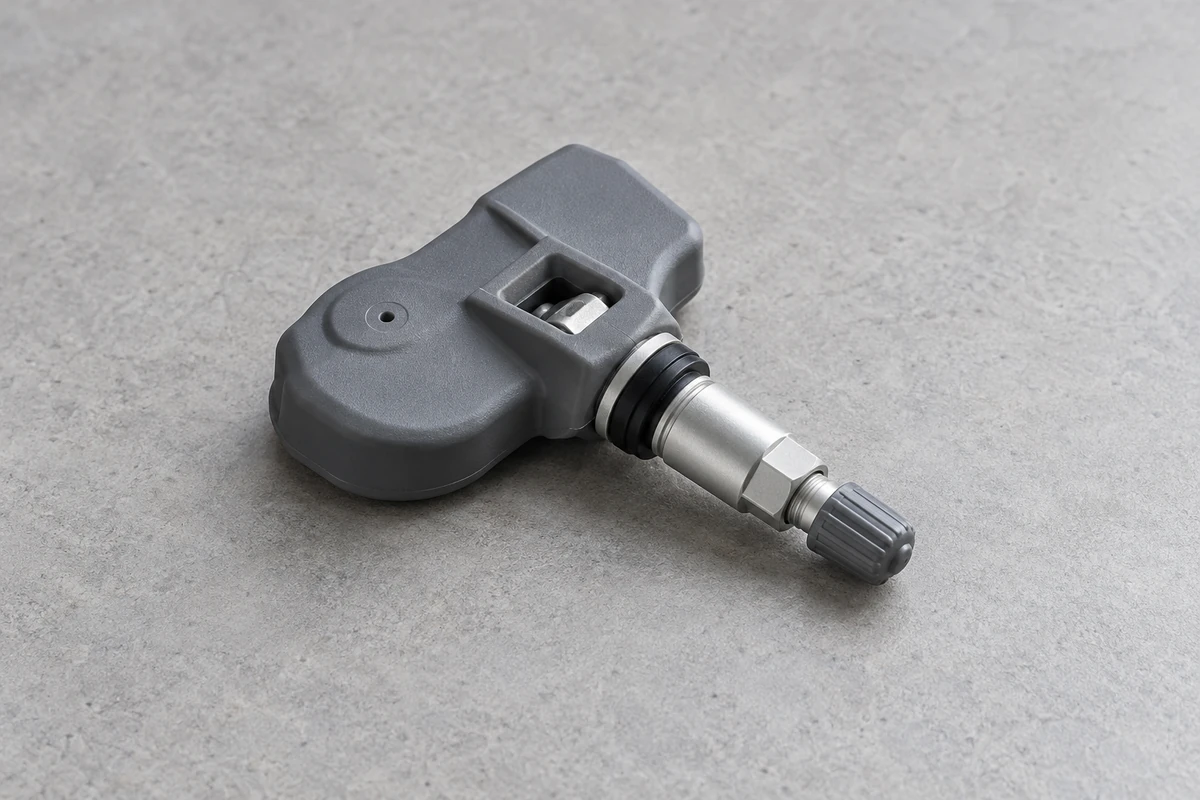
A sensor labelled programmed can still reach the receiving workshop with an unanswered question: programmed for which application, and who is responsible for the vehicle-learning work? A useful TPMS handover carries two separately attributable records. It should not turn the seller's programming statement into a declaration that the vehicle recognizes the sensor.
Start with the already selected sensor and authorized application record. This article addresses the transfer of service information after that selection. It does not establish fitment, select a service pack or describe how to operate a programming tool.
The manufacturer example has a defined scope
Schrader's North American EZ-sensor family page describes several named references as supplied blank for vehicle-specific programming. Its technical-support table provides different update routes for tool makes and models. These observations were checked on 14 October 2026; they do not establish current coverage for another sensor, tool or destination market. Schrader EZ-sensor family and tool-support information
The purchasing implication is to ask what the word programmed means in the actual delivery. A capability statement about a product family is different from an attributable record of work on the identified sensors. Likewise, a tool's update page is not evidence that the supplying workshop used a particular version or supported the selected application.
Give the programming declaration an identity
Request the exact sensor reference and the available unit identifier, then link them to the provider's programming declaration. Preserve the declared state: blank, programming claimed with a record, or state unconfirmed. Do not infer that an unlabelled sensor is blank or that a printed vehicle name proves the declared work occurred.
Ask which vehicle-identification basis the provider used. The relevant model, build, equipment and destination-market information should come from the actual application record. Share only the vehicle information necessary for the work; a customer's unrelated personal details do not belong in the handover packet.
Where the provider supplies tool make, model and software information, retain it as provenance for its record. The buyer should not download software, prescribe an update or decide compatibility from that information alone. Any current-support question belongs to the responsible service provider.
Assign vehicle learning without hiding it in delivery
A purchase line for programmed sensors may define only a supplied state. Ask whether vehicle-learning work is included in the actual service arrangement, who has accepted it and what record the recipient should expect. If that scope has not been agreed, leave it unassigned rather than adding an implied commitment to the sensor seller.
Keep three milestones separate in correspondence: sensor delivered, programming evidence received, and applicable vehicle-learning result supplied. The receiving workshop may need to review each, but a delivery signature cannot close all three. Nor does a missing report prove that work was never performed; it establishes a record gap to clarify.
A two-stage evidence worksheet
| Field | Entry to obtain | Unresolved question |
|---|---|---|
| Exact sensor | Reference and available unit identifier | Which delivered sensor does the statement cover? |
| Programming state | Provider declaration and record reference | Is the state claimed, documented or unknown? |
| Vehicle basis | Authorized application record used | Does the record name the intended application? |
| Tool provenance | Reported make, model and software reference | Who confirms current support if questioned? |
| Vehicle-learning owner | Named provider and agreed service scope | Has that provider accepted the task? |
| Completion evidence | Actual learning/result record and reviewer | What is documented, and what remains open? |
This is an editorial coordination record. It contains no tool sequence, menu selection or success criterion. The qualified reviewer determines whether the evidence answers the actual service requirement.
Fictional case: one label, two missing links
A fictional order includes sensors S-1 and S-2 described as programmed. The shipment card names a vehicle family, but the job record identifies only S-1 and an earlier application enquiry. The recipient has booked installation with Workshop W, whose quotation says nothing about vehicle learning. These identifiers and events are invented.
The buyer asks the supplier which actual sensor and application its record covers. S-2's state remains unconfirmed; copying S-1's record would conceal that gap. Separately, the buyer asks W to define whether the applicable learning task is within its proposed scope. W's willingness to receive the parts does not answer that question.
If the supplier later provides matched records for both sensors, the programming-document gap can close within the receiving review. The vehicle-learning assignment still needs its own answer. If W subsequently accepts that work, record the scope and await its attributable result rather than marking the vehicle complete on the day the appointment is booked.
Carry exceptions to the recipient
The final handover should show each sensor's declared state, the application basis and the status of the vehicle-dependent task. A substituted sensor or revised vehicle record can invalidate an earlier mapping, so ask the provider which evidence must be corrected. A complete packet preserves responsibility; it does not certify sensor performance or authorize road use.
Keep the purchasing enquiry focused
For category context, see Suspension parts. In an Autoparts sourcing request, identify the actual part and the unresolved handover question. The form supports an 8–1200-character description or a supported marketplace HTTPS link, and up to five PNG, JPEG, WebP or GIF images, limited to 10 MiB each and 20 MiB combined. PDF, CAD and ZIP files need a separately agreed, authorized exchange.
Independent aftermarket or unbranded buying coordination and supplier negotiation do not establish service-provider capability, fitment, engineering approval or a ready-for-use vehicle. Named manufacturers above are documentary examples, with no affiliation or branded-goods offer implied.
Frequently asked questions
Does programmed mean that the vehicle has learned the TPMS sensor?
Do not treat those statements as interchangeable. Obtain the identified sensor’s programming record and separately establish the applicable vehicle-learning responsibility and result. A label or delivery note alone cannot document vehicle recognition.
What if the programming sheet covers only one sensor in the order?
Keep the remaining sensors individually unresolved. Ask the provider to identify the units and application covered by its declaration instead of copying a report to similar-looking sensors. A complete order count does not establish a shared programming history.
Does a listed tool-update link prove current vehicle support?
No. It identifies a support route, not the actual tool version or application coverage used on this job. Ask the responsible provider to confirm those points; the buyer’s handover does not prescribe downloads or tool operation.
Who should own the vehicle-learning task?
Use the provider named in the actual accepted service scope. If nobody has accepted it, record an assignment gap and obtain a scoped proposal. Supplying sensors does not automatically commit the seller or receiving workshop to additional vehicle work.
Sources
Discuss a sourcing request related to this article.TPMS Handover: Programming and Relearn Records