
Record Oil on Newly Delivered Shock Absorbers Without Calling It Normal
Record oil location, wet packaging and handling history on newly delivered shocks without importing in-service weepage rules or wiping the evidence away.
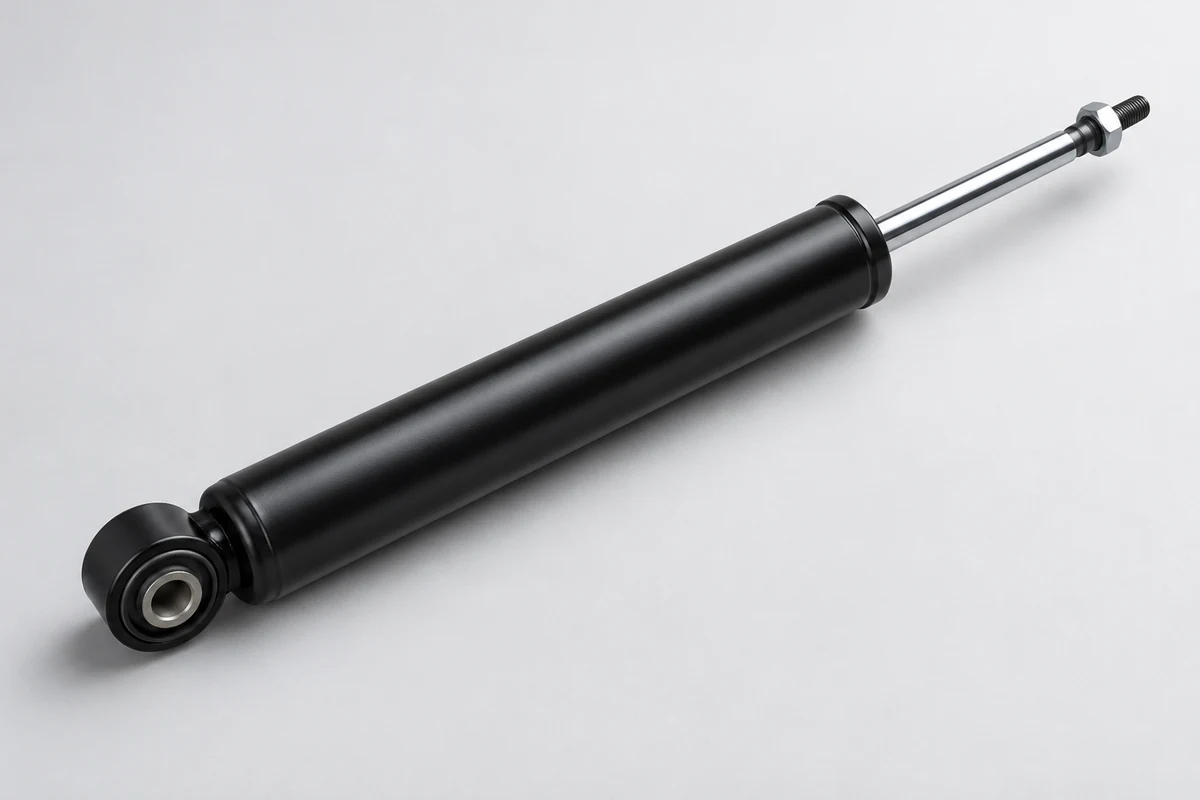
Oil visible on a newly delivered shock absorber should be recorded before it is called normal weepage or a failed seal. The buyer needs the exact location, visible extent, packaging relationship and known handling history. A service chart for a shock already operating on a vehicle does not supply an acceptance criterion for unused stock.
The useful receiving outcome is a product-specific decision on the identified delivered unit. It is not a diagnosis from an oily photograph and not a wipe-and-cycle exercise. Keep the shock in its documented supplied state while the responsible parties address the evidence.
Keep the service source in its service context
Monroe distinguishes a small oil film from extensive wetness or dripping when discussing shocks and struts in operation. Its explanation refers to movement during vehicle use. That context is essential: it does not establish why oil is visible on an unused delivery or tell a buyer which arrival condition to accept. Monroe weepage and leakage service guidance
A seller can legitimately point to the existence of different service conditions without answering the new-stock question. Ask what requirement and product-specific evidence apply to the delivered unit. Do not borrow a service illustration’s apparent wet area as a universal percentage limit for a warehouse receipt.
Equally, avoid jumping from “oil observed” to a definitive failed-seal diagnosis. The source, amount and history may be unknown. A precise observation can justify leaving the condition unresolved without pretending that the receiver has identified the failure mechanism.
Map the oil across the unit and its package
Record where oil-like material is visible on the accessible rod, body, end area or supplied sleeve. Describe its extent in words tied to an image: a narrow band, a broad wet-looking region, a wet sleeve or an actual observed drip. These descriptions are evidence categories, not grades of acceptable performance.
Distinguish “dripping observed” from “a drip-shaped mark is visible.” A still photograph may show a hanging drop or a streak without recording an ongoing event. Write what was actually seen and when. Do not tilt, shake or cycle the shock to create a more decisive observation.
Keep the packaging in the same evidence set. A narrow band on the body and a saturated-looking sleeve are not interchangeable facts. If the sleeve was already separated from the unit, record whether their association is certain. Oil from another package must not be attributed to this shock merely because the items share an outer carton.
Describe the as-received orientation where known. Do not reconstruct an entire transport orientation from how the carton happened to stand at receipt. If it was opened, moved or repacked before the first photo, record that sequence as reported rather than asserting untouched arrival condition.
Unknown origin is a useful finding
A supplier might suggest assembly residue, preservative or operating oil as possible explanations. Preserve each as an attributed statement until it is substantiated for the actual product and event. Purchasing should not select the most convenient explanation solely because it makes a claim easier to close.
Ask whether the explanation addresses both the unit and the wet packaging. A generic statement about a light film may not answer a sleeve with much more visible oil. Conversely, packaging wetness alone does not locate the source inside the shock. The point is to keep both observations available to a qualified decision maker.
Do not wipe the unit clean and use the absence of immediate new wetness as a receiving pass. Do not cycle the rod or run a road trial. Those actions change the history while supplying no agreed new-stock acceptance method. Where further examination is necessary, require a separately authorized competent assessment.
An oil-location and history worksheet
Use this original editorial worksheet to distinguish observation from service diagnosis.
| Field | Evidence to retain | Inference to avoid |
|---|---|---|
| Unit identity | Ordered reference, actual marking and package link | Assuming a generic chart covers this unit |
| Oil location | Accessible component area and original image | Naming the source from location alone |
| Visible extent | Band, broader wetness or other plain description | An invented acceptable percentage |
| Packaging relation | Sleeve/carton condition and reliable association | Automatically attributing all wetness to one shock |
| Drip observation | What was actually witnessed and when | Converting a still mark into an observed event |
| History and outcome | Known orientation/handling, unknowns and exact-product response | Treating wiped appearance as technical release |
A small visible region does not make missing history irrelevant. A large wet-looking region does not authorize an improvised diagnosis. Both require the applicable product-specific response, with the receiving observer’s scope kept clear.
Fictional counterexample: a service chart leaves the sleeve unanswered
A fictional unused shock S-4 has a narrow oily band on its body and a soaked-looking supplied sleeve. The seller cites a chart describing minor weepage on operating shocks and says the unit is normal. These facts and identifiers are invented.
The buyer records the band and sleeve separately, states that no cycling or installation occurred during receiving, and asks for the new-delivery criterion and an explanation addressing both observations. The chart remains a service reference rather than an acceptance decision for S-4.
Suppose the seller responds only that the body photograph resembles its light-film example. The packaging evidence is still unanswered. The buyer keeps S-4 unresolved and requests an exact-product disposition instead of wiping the sleeve and taking a cleaner photo. There is no claim here that the shock definitely failed or that replacement is automatically owed.
If an agreed replacement arrives, it receives its own condition record and its own required acceptance. The original chart discussion stays linked to S-4 rather than being deleted from the history.
Require a decision that covers the actual evidence
The final response should identify the unit, applicable requirement, evidence reviewed and outstanding limitations. A commercial allowance may settle a payment discussion while leaving the shock’s suitability unresolved. Only the authorized technical process can decide the relevant condition question; this article supplies neither a service diagnosis nor a universal new-stock oil limit.
Keep the buying request tied to the actual part
For category context, see Suspension and steering; the supplier-check guide covers the earlier supplier review. Independent aftermarket or unbranded sourcing and authorized drawing-based proposals require their own product evidence. The manufacturer cited here is a documentary example, not an affiliation, branded-goods offer or endorsement of another supplier.
Start an Autoparts sourcing request with the exact received reference and the unresolved question. The form accepts an 8–1200-character description and up to five PNG, JPEG, WebP or GIF images, at most 10 MiB each and 20 MiB total. PDF, CAD and ZIP uploads are not supported. Arrange other technical files through a separately agreed, authorized exchange. Buying coordination and supplier negotiation do not establish an owned laboratory, an inspection service, engineering approval or a guaranteed remedy.
Frequently asked questions
Can Monroe’s weepage chart be used to accept a new shock delivery?
The cited guidance concerns operating shocks and struts. It does not provide a universal criterion for unused stock. Ask for the actual delivered product’s receiving requirement and a response covering its condition and packaging evidence.
Should I wipe the oil off and see whether it returns?
Do not make wiping and waiting a receiving acceptance test. It changes the original evidence and leaves the applicable criterion unresolved. Preserve the observation and let the responsible technical owner determine any separately authorized assessment.
Does a wet sleeve prove the shock is leaking?
It is relevant evidence but does not by itself establish the source. Keep the sleeve reliably linked to the unit and record other known packaging context. An explanation should address both the unit and packaging without guessing causation.
How should I describe a possible drip?
Distinguish an event you actually witnessed from a drop-shaped mark or streak in a still image. Record the time and limits of the observation without tilting or cycling the unit to provoke a result. The wording should not imply an unperformed test.
Sources
Discuss a sourcing request related to this article.Record Oil on Newly Delivered Shock Absorbers Without Calling It Normal